

Home Our Territory From the Tŝilhqot’in War to the Supreme Court: A Timeline
From the Tŝilhqot’in War to the Supreme Court: A Timeline
In 1864, the Tŝilhqot’in Nation went to war to defend its territory, its people, and its way of life.
The Tŝilhqot’in War, also called the Chilcotin War or Tsilhqot’in War, was a defining moment in the Nation’s history. One hundred and fifty years later, on June 26, 2014, the Supreme Court of Canada recognized Tŝilhqot’in Aboriginal Title to approximately 1,900 square kilometres of that same territory. The first declaration of Aboriginal Title in Canadian history. This timeline traces the long arc between those two moments, and the work that continues since.
The story is not linear and it is not finished. It runs through generations of leadership, six War Chiefs, decades of resistance to logging and mining, twenty-five years in court, and the elders whose testimony carried the case.
Last updated: August 2026 | Tŝilhqot’in National Government
On this page
- Before Contact: Tŝilhqot’in Governance and Dechen Ts’edilhtan
- The Tŝilhqot’in War / Chilcotin War (1864/65)
- A Century of Encroachment (1865 to 1973)
- Standing the Ground: The Chilcotin and Nemiah Declarations (1983 to 1989)
- The Brittany Triangle Roadblock (1992)
- Twenty-Five Years in Court (1990 to 2014)
- The Tŝilhqot’in Decision (June 26, 2014)
- Exoneration of the War Chiefs
- The Work Since: Negotiated Agreements and Teẑtan Biny
- Where the Story Sits Today
- Frequently Asked Questions


Before Contact: Tŝilhqot’in Governance and Dechen Ts’edilhtan
For countless generations before the arrival of settlers, the ʔesggidam, the Tŝilhqot’in ancestors, governed this territory as a powerful nation. Tŝilhqot’in laws, language, and ceremony were known beyond the territory. The land was managed through Dechen Ts’edilhtan, the laws of the Tŝilhqot’in, passed down from generations since sadanx (of long, long ago).
“Before contact we were a group of people who lived off this Land through our legends, our history, our stories and rituals. We didn’t own it per se, but we were a part of it. There were place names, and we protected those areas and place names.”
– Nits’ilʔin Roger William, Xeni Gwet’in
The arrival of settlers brought devastation before it brought treaties. Between June 1862 and January 1863, travellers estimated that over two thirds of all Tŝilhqot’in died of smallpox. The Nation that emerged from those years was smaller, but its laws and its claim to the land had not changed.
The Tŝilhqot’in War / Chilcotin War (1864/65)
When the Colony of British Columbia was established in 1858, the Tŝilhqot’in continued to govern their lands without interference, with minimal contact with Europeans. That changed in 1861, when settlers began to pursue plans for a road from Bute Inlet through Tŝilhqot’in territory to access the new Cariboo gold fields. The road crew entered without permission, without compensation, and without diplomacy. Tŝilhqot’in women and children were disrespected and abused. Labourers were refused food. Demands for payment for entry into Tŝilhqot’in territory were denied.
In a pivotal encounter, a road-builder accused the Tŝilhqot’in crew of theft. They answered, “you are in our country and you owe us bread.” In response, the road-builder wrote down their names in a book and threatened to eliminate them with smallpox. Only months after the epidemics that had killed two-thirds of the Nation, the threat was taken with absolute seriousness.
The Tŝilhqot’in declared war.
At dawn on April 30, 1864, a group of Tŝilhqot’in warriors led by Lhatŝ’aŝʔin attacked the road crew’s main and advance camps. By June 1864, the road project was abandoned and no settler activity remained between the Pacific Ocean and the Fraser River, a span of 400 kilometres. Colonial militia, about 150 men, wandered Tŝilhqot’in territory without success, unable to engage or locate the Tŝilhqot’in war parties in territory that was unknown to them but intimately known to the Tŝilhqot’in. The colony had many casualties, including fur trader Donald McLean, whose sole mission was to hunt down Lhatŝ’aŝʔin. The militia retreated soon after.
On August 15, 1864, Lhatŝ’aŝʔin and seven others came unarmed to discuss peace under a flag of truce. They were shackled and tried as murderers. Lhatŝ’aŝʔin’s final comment about the trials was that “we meant war, not murder.” Five Tŝilhqot’in War Chiefs were hanged in Quesnel on October 26, 1864, in one of the largest mass executions in Canadian history. A sixth, ʔAhan, was hanged in New Westminster on July 18, 1865.
The Tŝilhqot’in people have honoured these Chiefs ever since. October 26 is observed as Lhatŝ’aŝʔin Memorial Day, formally established in 1999, commemorating the Tŝilhqot’in War Chiefs who lost their lives in the aftermath of the Chilcotin War.
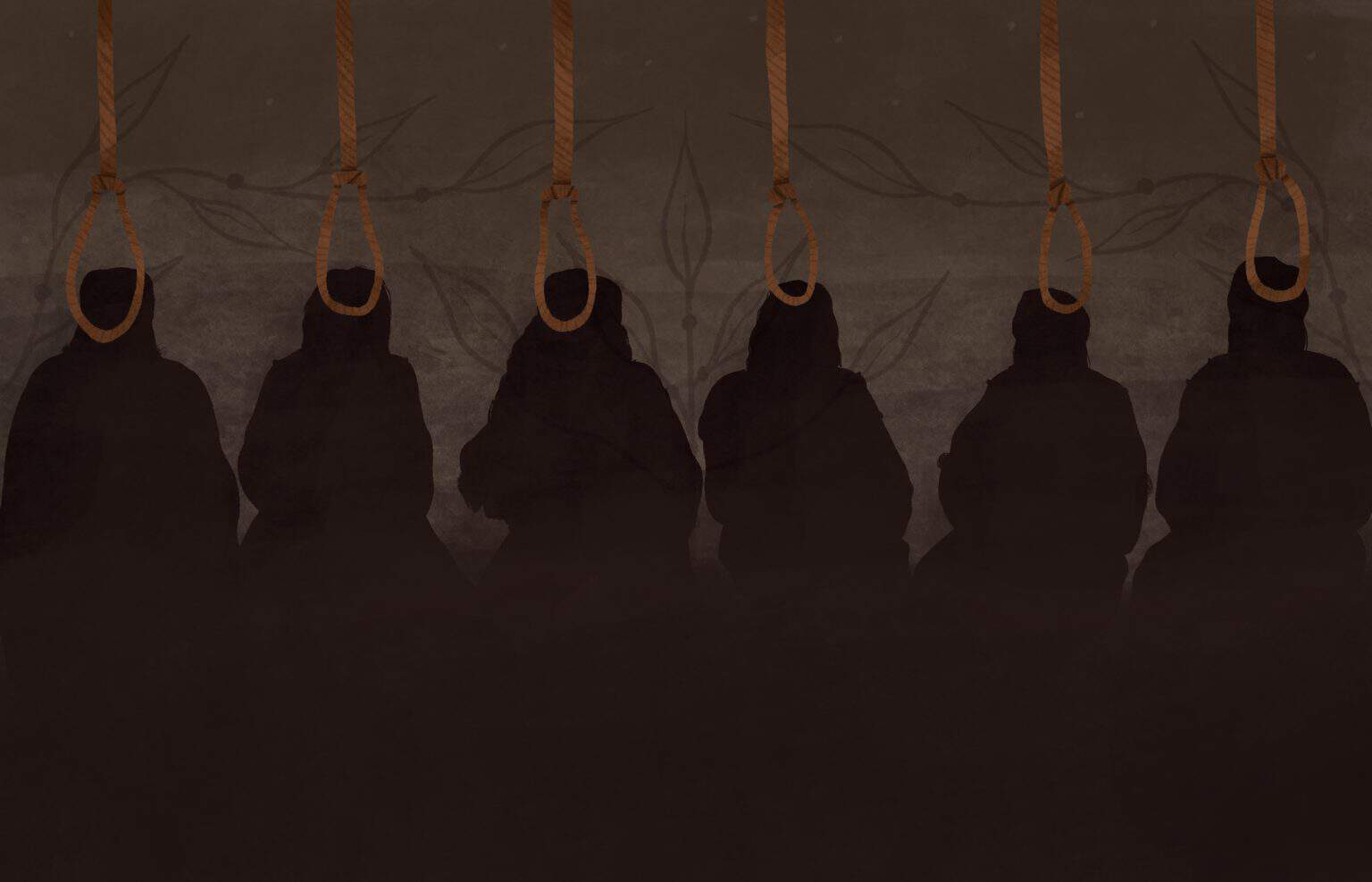
Commemorative artwork for the six Tŝilhqot’in War Chiefs.
A Century of Encroachment (1865 to 1973)
The decades that followed brought the Indian Act, residential and day schooling, child apprehension, and the steady opening of Tŝilhqot’in territory to outside interests under colonial law. The Tŝilhqot’in continued to live by Dechen Ts’edilhtan, but the legal system around the Tŝilhqot’in people refused to recognize Tŝilhqot’in title at all.
Until 1973, no road reached the Nemiah Valley. Trips into Williams Lake took a week by horse and wagon, and the inaccessibility of much of the territory was part of what kept it whole. That same year, the Supreme Court of Canada released Calder v British Columbia, the first case in which the Court acknowledged that Aboriginal title existed in Canadian law. The Court split on whether it had been extinguished in BC, and the Nisga’a claim was dismissed, but the door had been opened.
Standing the Ground: The Chilcotin and Nemiah Declarations (1983 to 1989)
By the 1980s, the threats to Tŝilhqot’in territory were no longer settlers on a road crew. They were forestry licences, mining proposals, and a BC Hydro plan that would have flooded the entire Nemiah Valley by linking Dasiqox Biny (Taseko Lake) and Tŝilhqox Biny (Chilko Lake). The hydroelectric project was opposed fiercely and was never built. Clearcut logging continued to encroach on the valley.
In 1983, the People of Xeni passed the Chilcotin Declaration: “We are the Chilcotin and we declare to all men and women that we are an independent Nation, proud and free.”
On August 23, 1989, the Xeni Gwet’in proclaimed the Nenduwh jid guẑit’in Declaration, known in English as the Nemiah Declaration. It set out specific protections for the Nemiah Wilderness Preserve and reaffirmed Xeni Gwet’in jurisdiction over their caretaker area. Read more about the Declaration and the valley it protects on The Nemiah Valley: Protecting Tŝilhqot’in Territory.
That same year, the Xeni Gwet’in, with Nits’ilʔin Roger William as plaintiff, began legal proceedings against British Columbia to stop logging in Tachelach’ed (Brittany Triangle) and the Trapline Territory. The Tŝilhqot’in Nation later took the case on, carrying it forward on behalf of all Tŝilhqot’in. The Tŝilhqot’in National Government was also established in 1989 to represent the six Tŝilhqot’in communities of Tl’etinqox, ʔEsdilagh, Yuneŝit’in, Tŝideldel, Tl’esqox, and Xeni Gwet’in.
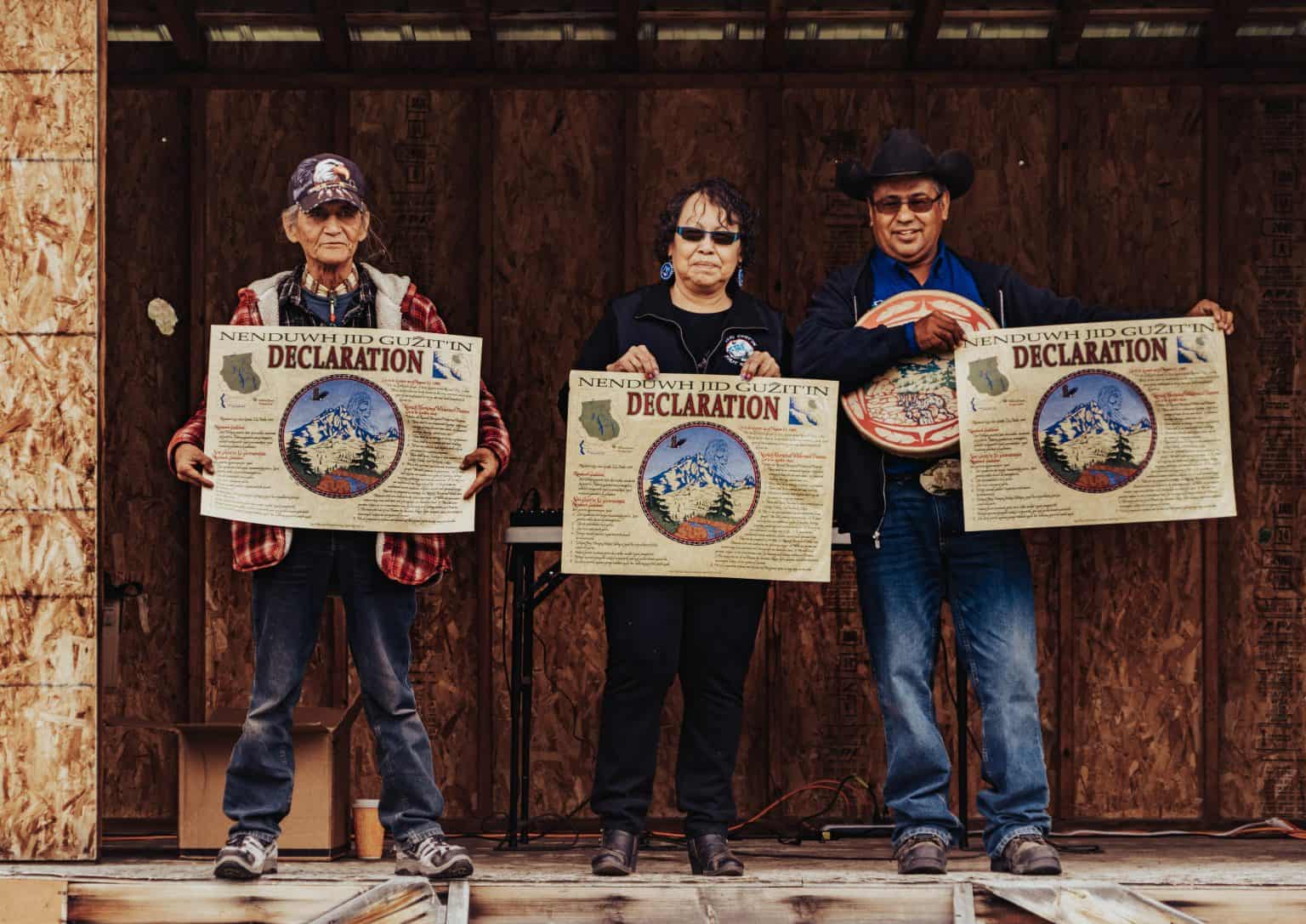
Xeni Gwet’in Elders Gilbert Solomon, Annie C. William, and Chief Roger William holding copies of the Declaration. Photo: Keith Koepke.
The Brittany Triangle Roadblock (1992)
The Nemiah Declaration was tested almost immediately. In 1992, the BC Ministry of Forests granted Carrier Lumber a permit to log in the Brittany Triangle. The people of Xeni erected a roadblock at Henry’s Crossing. The province pulled the permit. On May 7, 1992, Carrier Lumber turned away.
The roadblock at Henry’s Crossing held for two months and led to a Memorandum of Understanding signed with the BC Government of the day. The Brittany Gathering is held every May 7 to mark the date, discuss current events, and to honour the Tŝilhqot’in and Tŝilhqot’in supporters who stood at the roadblock.
“During the roadblock, there were ceremonies, there was drummin’, and we had a lot of meetings in our language, and it always came from the people.”
– Nits’ilʔin Roger William, Xeni Gwet’in
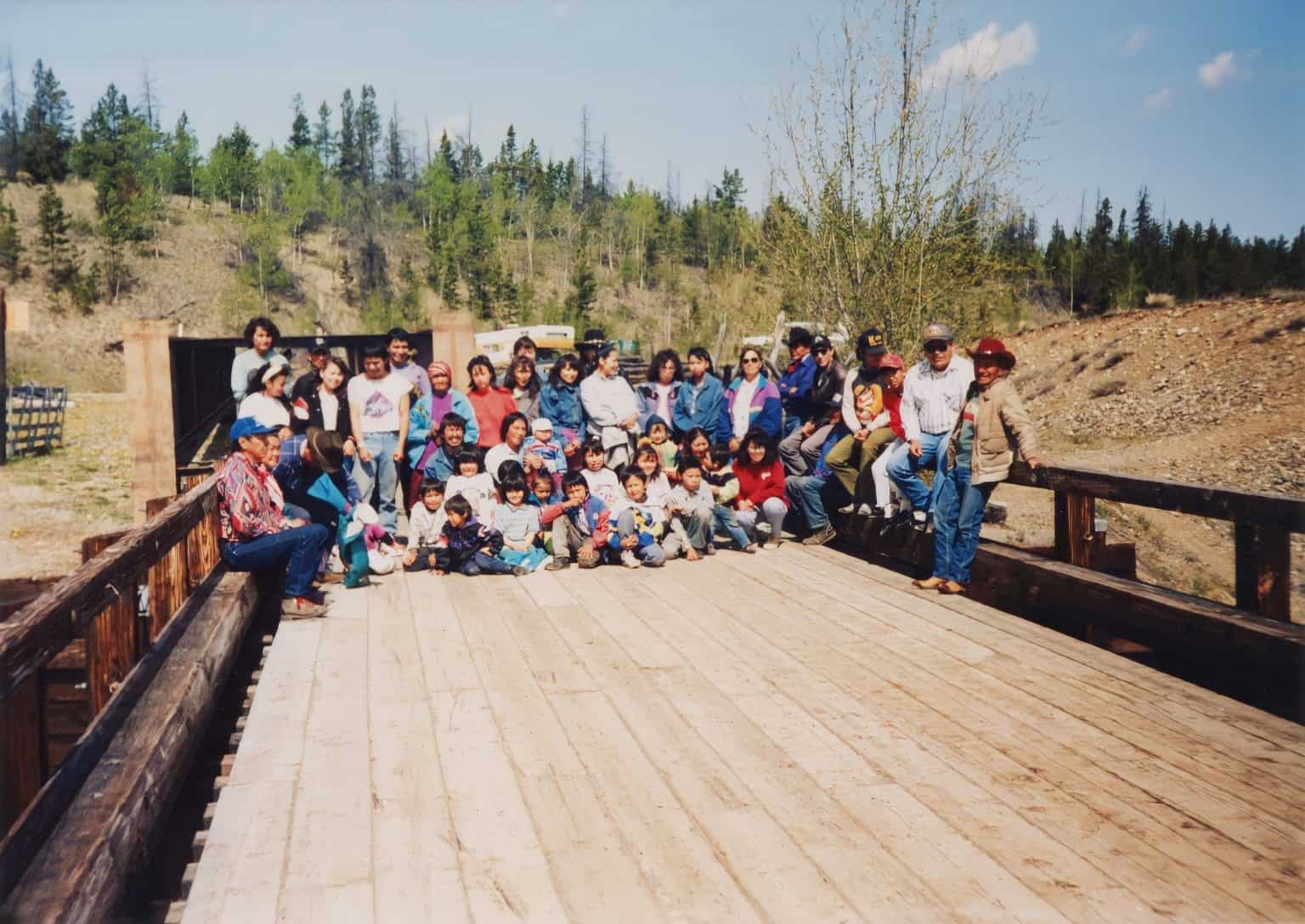
The blockade at Henry’s Crossing, 1992. Photo provided by Margaret Lulua.
Twenty-Five Years in Court (1990 to 2014)
The Trapline Action was filed in April 1990. What followed was a twenty-five year legal journey through three levels of court.
The Supreme Court of Canada confirmed that Aboriginal Title continues to exist as a legal interest and set out the test for proving it. The Court ordered a new trial in the Gitxsan and Wet’suwet’en case rather than issuing a declaration, but the legal framework was now in place. Read the decision.
The Plaintiff launched a second action against BC and forest companies in response to expanded logging authorizations beyond the original Trapline Action. The two were consolidated for trial in 2002.
The Title and Rights trial opened in the BC Supreme Court. It would run until 2007.
Justice David Vickers released a 1,400 paragraph decision, 2007 BCSC 1700. He found that the Tŝilhqot’in had met the test of Aboriginal Title to approximately 40 percent of the Claim Area and recognized Aboriginal rights to hunt, trap and trade and catch and use wild horses throughout the entire Claim Area. He declined to issue a formal declaration of Title on a technicality.
“Judge David Vickers said that we met the test of Title, but he didn’t make a declaration of Title. He found Title to almost 50 percent of the area, drew boundaries without actually declaring Title, and encouraged negotiations. On a technicality, he stopped short of making a declaration.”
– Nits’ilʔin Roger William, Xeni Gwet’in
The Court of Appeal affirmed the hunting, trapping and trade rights but took a narrow “site-specific” view of Aboriginal Title, ruling that it could only be claimed over small, intensively used village sites. Both sides appealed.
Tŝilhqot’in leadership and elders travelled to Ottawa in what was known as the Journey for Justice.
Throughout the case, the foundation of the evidence was the testimony of Tŝilhqot’in elders. Twenty-eight elders gave evidence in chief and in cross-examination, some over weeks at the Victoria Court House, others through affidavits or video-taped depositions at Naghtaneqed School in Xeni. Without them, the case could not have been made.
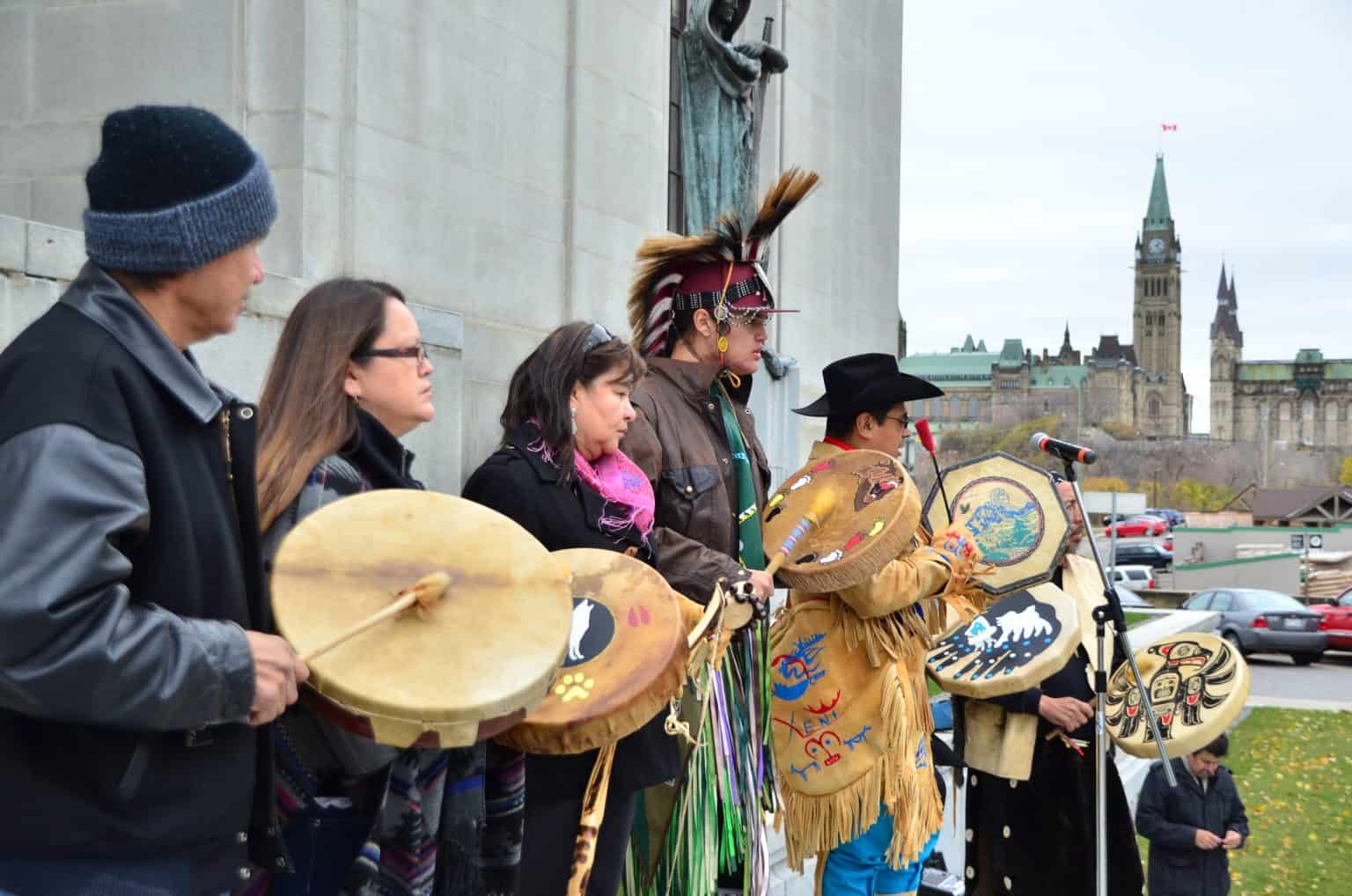
The Journey for Justice. Tŝilhqot’in drummers outside Supreme Court in Ottawa during the 2013 Supreme Court hearing. Photo: Jeremy Williams.
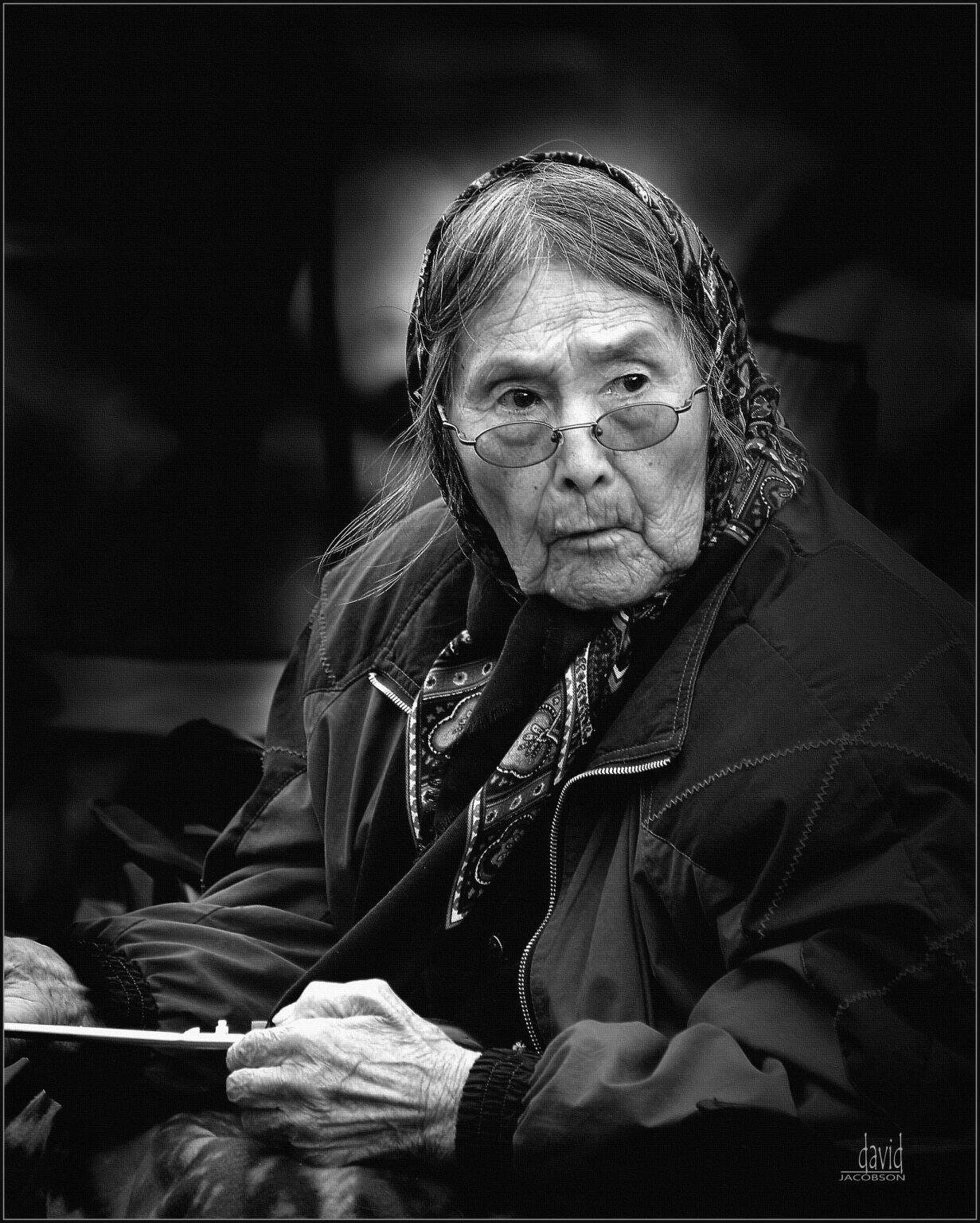
The late Mabel William, one of the twenty-six Elders who provided testimony in the case. Photo: David Jacobson.
The Tŝilhqot’in Decision (June 26, 2014)
On June 26, 2014, the Supreme Court of Canada released Tsilhqot’in Nation v British Columbia, 2014 SCC 44. The ruling was unanimous, eight justices to zero. Chief Justice Beverley McLachlin wrote for the full bench.
The Court rejected the “postage stamp” view of Aboriginal Title and declared Title to approximately 1,900 square kilometres of land within Tŝilhqot’in territory, much of it the caretaker area of Xeni Gwet’in. The first declaration of Aboriginal Title in Canadian history. The Court confirmed that Aboriginal Title gives the Tŝilhqot’in the right to control the land, to use and manage it and to the economic benefits of the land and its resources.
“Now the law is back in place. We fought very hard for our traditional law (Dechen Ts’edilhtan). It’s the law of our ancestors that we have been using all of our lives being Tŝilhqot’in. This is Tŝilhqot’in Title. This is our Title.”
– Nits’ilʔin Roger William, Xeni Gwet’in (response after Title was declared on June 26, 2014)
For a full breakdown of what the Court decided and what it changed in Canadian law, see Tŝilhqot’in Rights & Title.
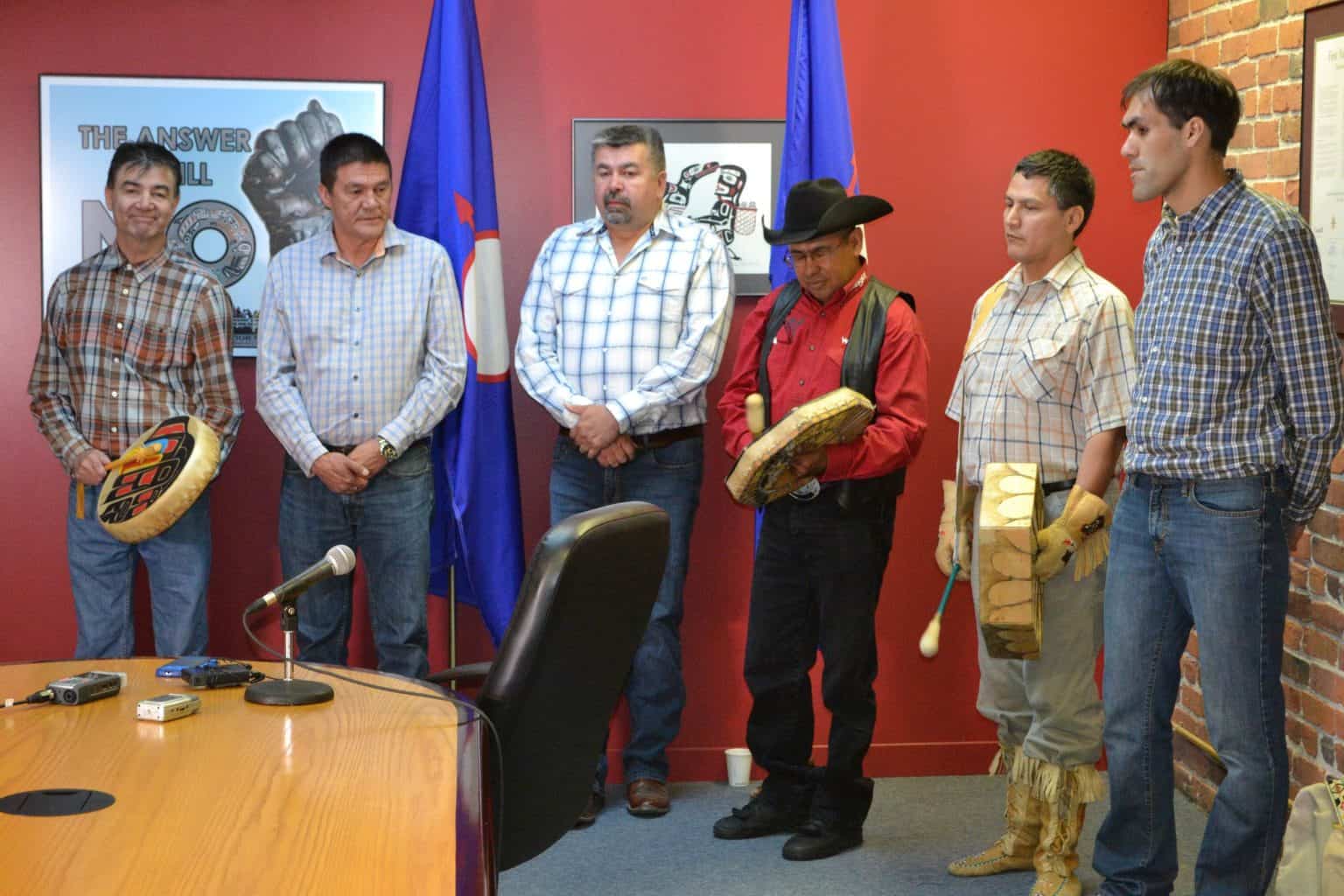
Tŝilhqot’in Nits’ilʔin-Qi (Chiefs) on June 26, 2014, the day Aboriginal Title was declared.
Exoneration of the War Chiefs
On October 23, 2014, four months after the Supreme Court ruling, the Premier of British Columbia formally exonerated the six Tŝilhqot’in War Chiefs of all wrongdoing.
On March 26, 2018, the Prime Minister of Canada delivered a formal exoneration in the House of Commons, recognizing the Chiefs as leaders of the Nation who acted in accordance with their laws and traditions. On November 2, 2018, the Prime Minister came to declared Title lands to deliver that exoneration directly to the Tŝilhqot’in people.
“We recognize that these six Chiefs were leaders of a Nation, that they acted in accordance with their laws and traditions and that they are well-regarded as heroes by their people.”
– Prime Minister Justin Trudeau, 2018 Exoneration Speech
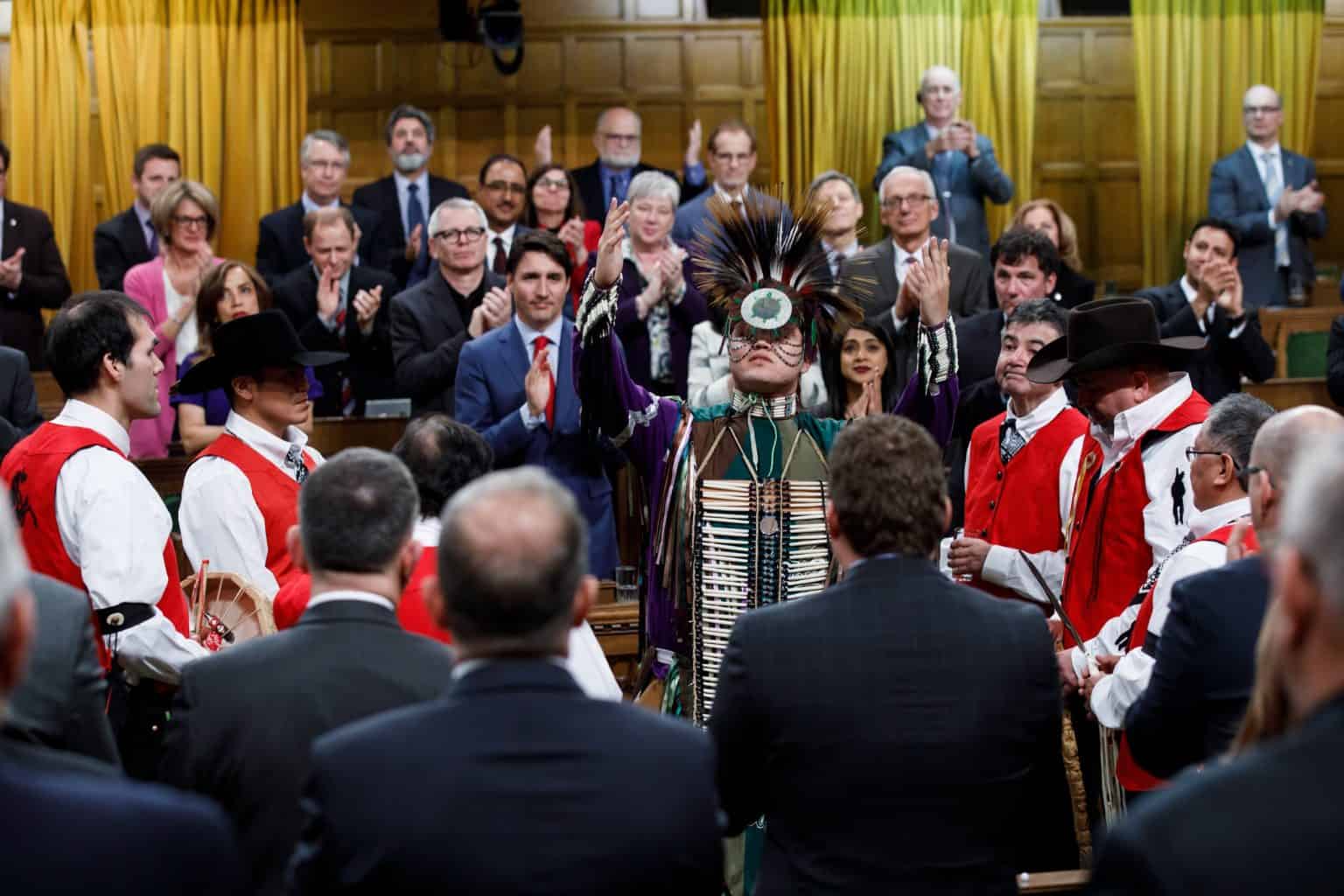
The formal exoneration by the Canadian Government in the House of Commons, March 26, 2018.
The Work Since: Negotiated Agreements and Teẑtan Biny
The 2014 decision was a beginning, not an ending. In the years since, the Tŝilhqot’in have negotiated a series of “made-in-Tŝilhqot’in” reconciliation agreements outside the treaty process, grounded in the principles of self-determination.
These include the Letter of Understanding with British Columbia (2014) and Canada (2017), the Nenqay Deni Accord with BC (2016), and the Gwets’en Nilt’i Pathway Agreement with BC and Canada (2019, renewed in 2024). The Gwets’en Nilt’i Pathway Agreement was, and remains, ground-breaking. Its stated purpose is to “bring transformative change … to the lives of the Tŝilhqot’in peoples and to the relationship” with Canada and British Columbia (s. 1.1 of the Agreement). At the heart of these agreements are the 8 Pillars, the priority areas where the Nation has heard from the Tŝilhqot’in people, again and again, that real change is needed for Tŝilhqot’in people, families and communities.
In 2015, the Nenduwh jid guẑit’in Declaration was officially passed into law for the Aboriginal Title area.
The fight to protect Tŝilhqot’in territory also continued at Teẑtan Biny (Fish Lake), where the Nation defended sacred waters against the proposed Prosperity and New Prosperity mines for nearly three decades. The Government of Canada rejected the project in 2010 and 2013. The Supreme Court refused Taseko’s leave to appeal in 2019. In 2025, the Teẑtan Biny Gagaghut’i Agreement was signed between TNG, the Province, and Taseko Mines Limited, giving consent rights to the Tŝilhqot’in for any future mineral exploration or mine development in the area.
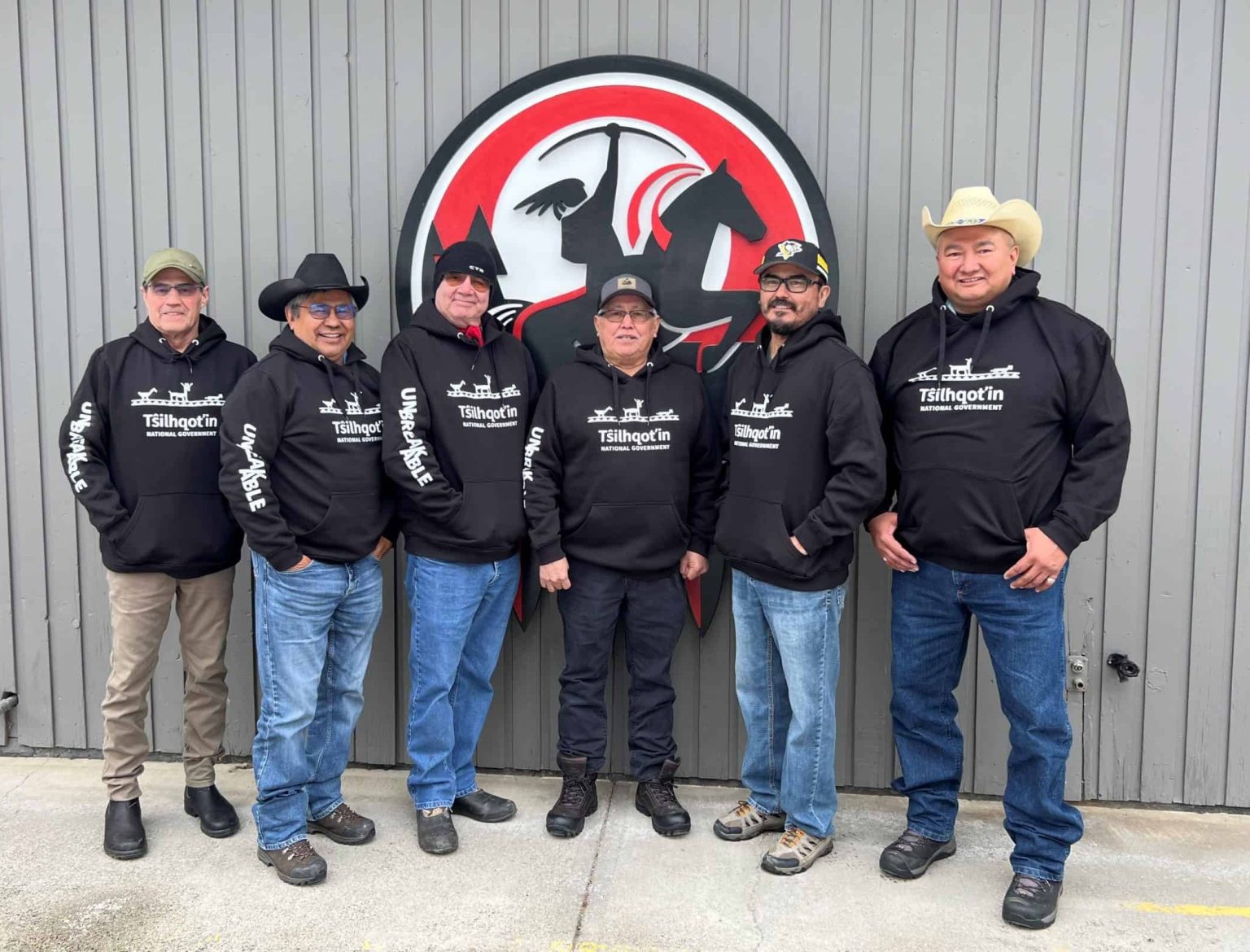
Tŝilhqot’in Nits’ilʔin-Qi, 2026.
Where the Story Sits Today
In the 2014 ruling, the Court recognized what the Nation has always known to be true. Title was never surrendered. What changed in June 2014 was Canadian law, finally brought into alignment with what Tŝilhqot’in Elders, leaders, and Ancestors have passed down through generations.
The work continues. Aboriginal Title established the legal authority. The years since have been about exercising that authority through Tŝilhqot’in laws, through stewardship of the territory, and through highly collaborative approaches and agreements with other governments, industry, and neighbours.
To explore the rest of the story, see Tŝilhqot’in Rights & Title and The Nemiah Valley: Protecting Tŝilhqot’in Territory. The full map of the Declared Title Area is available on the TNG website.
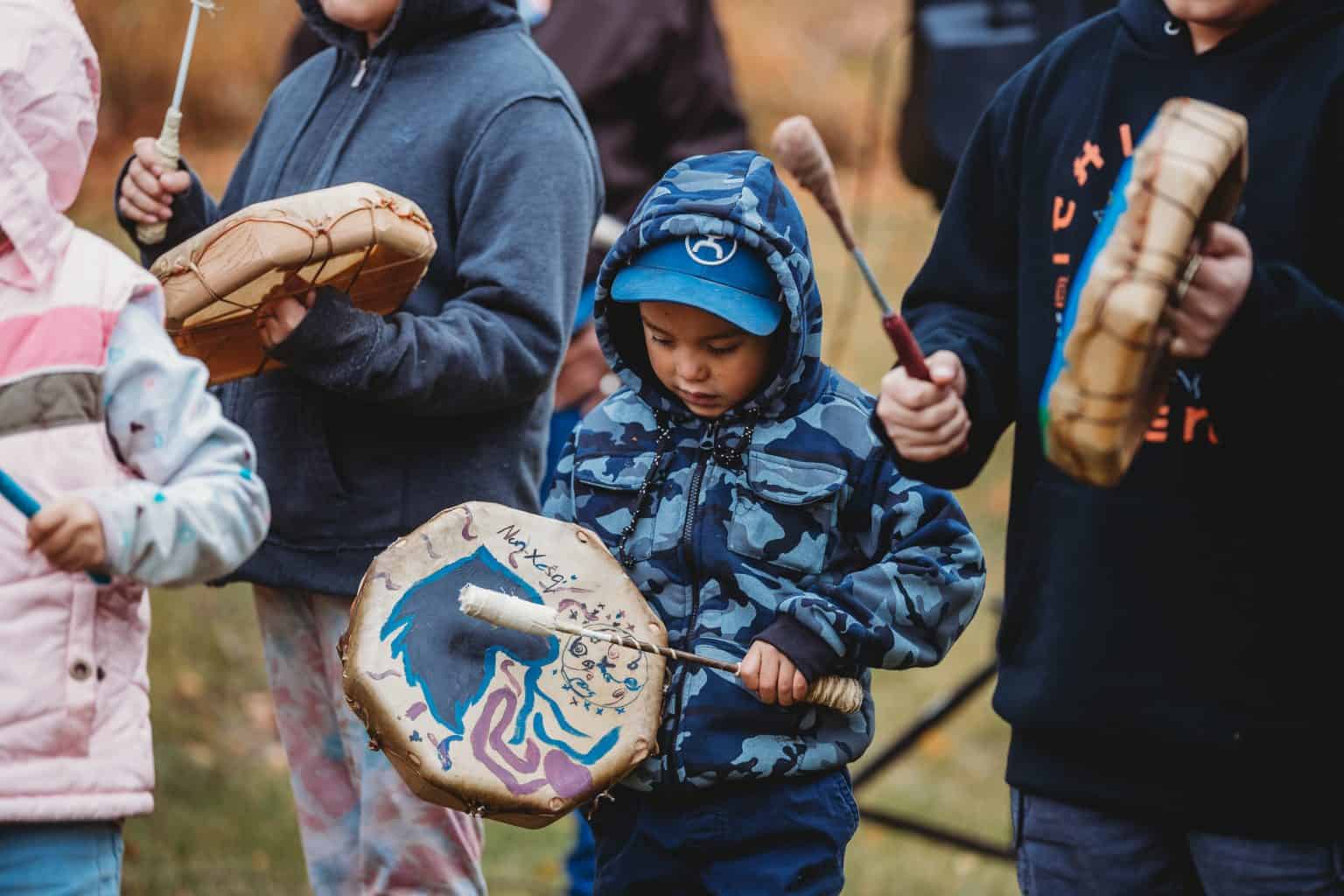
Drumming at Lhatŝ’aŝʔin Memorial Day. Photo: Laureen Carruthers.
Frequently Asked Questions
The Tŝilhqot’in War, also called the Chilcotin War, took place in 1864 and 1865. In retaliation to threats and abuse, Tŝilhqot’in warriors led by Lhatŝ’aŝʔin first attacked the Bute Inlet road crew on April 30, 1864. Five Tŝilhqot’in War Chiefs were hanged in Quesnel on October 26, 1864, and a sixth, ʔAhan, was hanged in New Westminster on July 18, 1865.
During the gold rush, road crews were trying to build a road from Bute Inlet through the Tŝilhqot’in Territory without permission from the Tŝilhqot’in Nation. The crews also abused Tŝilhqot’in people and threatened to spread smallpox.
Six Tŝilhqot’in Nits’ilʔin (Chiefs) were wrongfully tried and hanged in the aftermath of the Chilcotin War: Lhatŝ’aŝʔin and four others on October 26, 1864 in Quesnel, and ʔAhan on July 18, 1865 in New Westminster. They were formally exonerated by British Columbia in 2014 and by Canada in 2018, recognized as leaders of the Nation who acted in accordance with Tŝilhqot’in laws and traditions.
Aboriginal Title was declared to the Tŝilhqot’in Nation on June 26, 2014, by a unanimous decision of the Supreme Court of Canada in Tsilhqot’in Nation v British Columbia, 2014 SCC 44. It was the first declaration of Aboriginal Title in Canadian history and covered approximately 1,900 square kilometres of land, much of it the caretaker area of Xeni Gwet’in, one of the six distinct Tŝilhqot’in communities.
Twenty-five years. The original action was filed in 1990 and a second action in 1998. The trial began in 2002 and ran until 2007, when Justice Vickers released a 1,400 paragraph decision finding that the Tŝilhqot’in had met the test of Aboriginal Title. The BC Court of Appeal ruled in 2012, and the Supreme Court of Canada heard the case in November 2013 and released its judgment on June 26, 2014.
The Declared Title Area covers approximately 1,900 square kilometres in the Chilcotin region of British Columbia, located approximately 150 kilometres southwest of Williams Lake. Much of the area is the caretaker territory of Xeni Gwet’in, including the Nemiah Valley, Tachelach’ed (Brittany Triangle), and lands along the Tŝilhqox (Chilko River).
Lhatŝ’aŝʔin Memorial Day is observed every year on October 26, the day the five Tŝilhqot’in War Chiefs were wrongfully hanged in Quesnel in 1864. It was formally established as a Tŝilhqot’in national memorial day in 1999 and honours the Chiefs who sacrificed their lives in defence of Tŝilhqot’in lands and ways of life during the Chilcotin War.
Also known as the Nemiah Declaration, this declaration is a statement by the people of Xeni on what they allow to happen in the Xeni Gwet’in area and what they do not allow. It clearly outlines expectations of use by all visitors, residents, government and industry. Read more on The Nemiah Valley: Protecting Tŝilhqot’in Territory.
