

Home Our Territory The Nemiah Valley: Protecting Tŝilhqot’in Territory
The Nemiah Valley: Protecting Tŝilhqot’in Territory
The Nemiah Valley is one of the remotest areas of Tŝilhqot’in territory and the caretaker area of the Xeni Gwet’in.
For generations, the people of Xeni have lived with this land, defended it, and maintained their inherent jurisdiction, protecting it for the generations to come. This page tells the story of the valley, the community, and the long fight to keep it whole.
Last updated: August 2026 | Tŝilhqot’in National Government
The Land and the People of Xeni
Nemiah Valley (also spelled Nemaiah Valley and Nemaia Valley) sits between Tŝilhqox Biny (Chilko Lake) and Dasiqox Biny (Taseko Lake) in Tŝilhqot’in Territory, approximately 150 kilometres southwest of Williams Lake in the Cariboo Chilcotin region of the Central Interior of British Columbia. It is the caretaker area of the people of Xeni, the Xeni Gwet’in. The valley is remote and high in elevation, with mountains, rivers, and lakes that are home to grizzlies, lynx, mountain goat, grey wolf, cougars, and more. The community of Xeni remains off-grid today, with solar power as its main source of electricity.
Until 1973, no roads reached the valley at all. The Xeni Gwet’in lived and worked here as their ancestors had, with trips to Williams Lake taking a week by horse and wagon. The road that exists today is still rough, and the inaccessibility of the valley has been part of what has kept it whole.
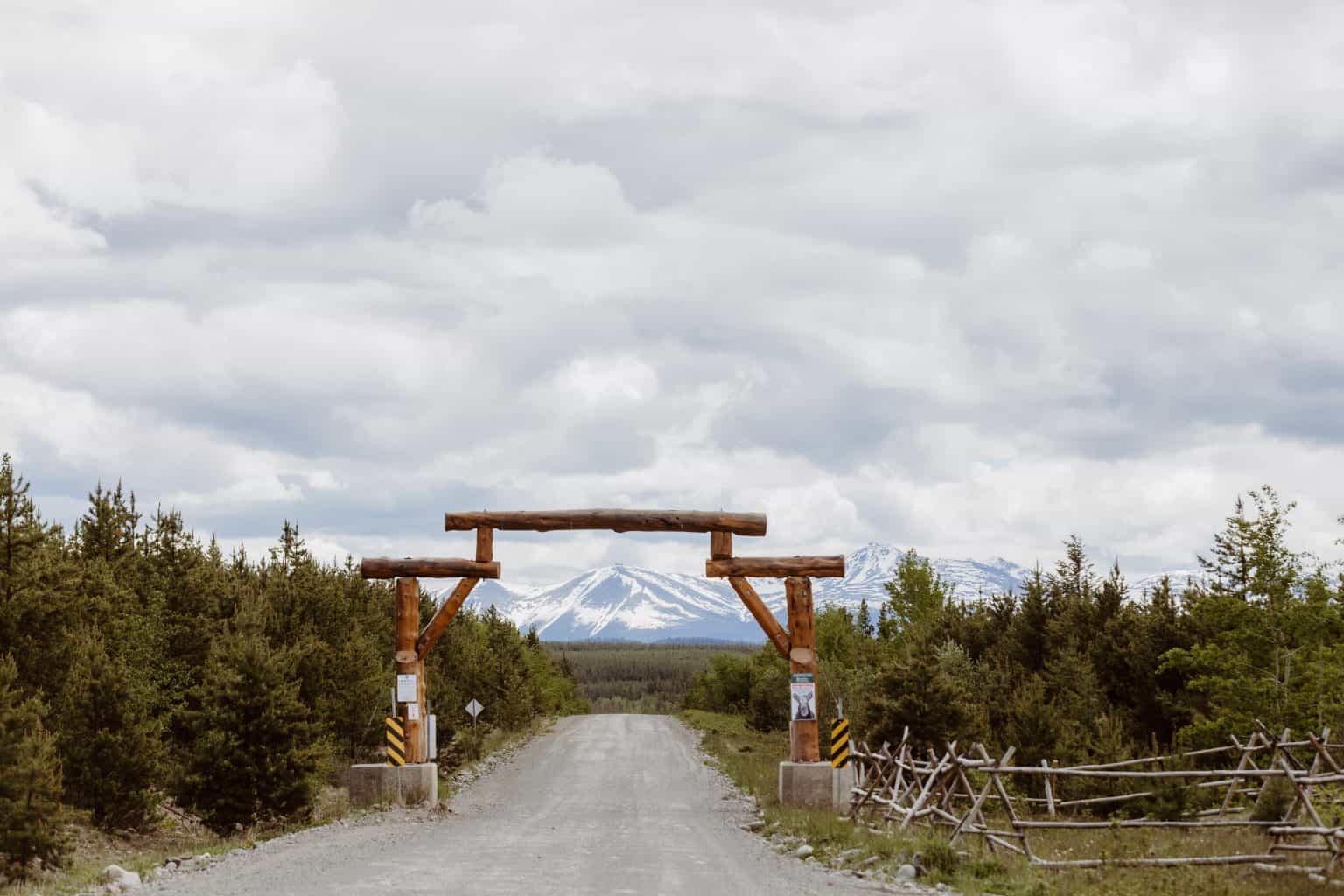
Taseko Lake Road entering Nemiah Valley.
“Before contact we were a group of people who lived off this Land through our legends, our history, our stories and rituals. We didn’t own it per se, but we were a part of it. There were place names, and we protected those areas and place names.”
– Nits’ilʔin Roger William, Xeni Gwet’in
Quotations from Nits’ilʔin Roger William are drawn from the David Suzuki Foundation, Nemiah: Home of the Xeni Gwet’in (2000).
The people of Xeni survived off the land through hunting, fishing, berry-picking, and trapping, with a profound cultural and spiritual connection to the land.
“We all spoke Tŝilhqot’in. The animals and the people spoke the language. Many of our stories speak to our laws and our connection to the land and animals.”
– Nits’ilʔin Roger William, Xeni Gwet’in
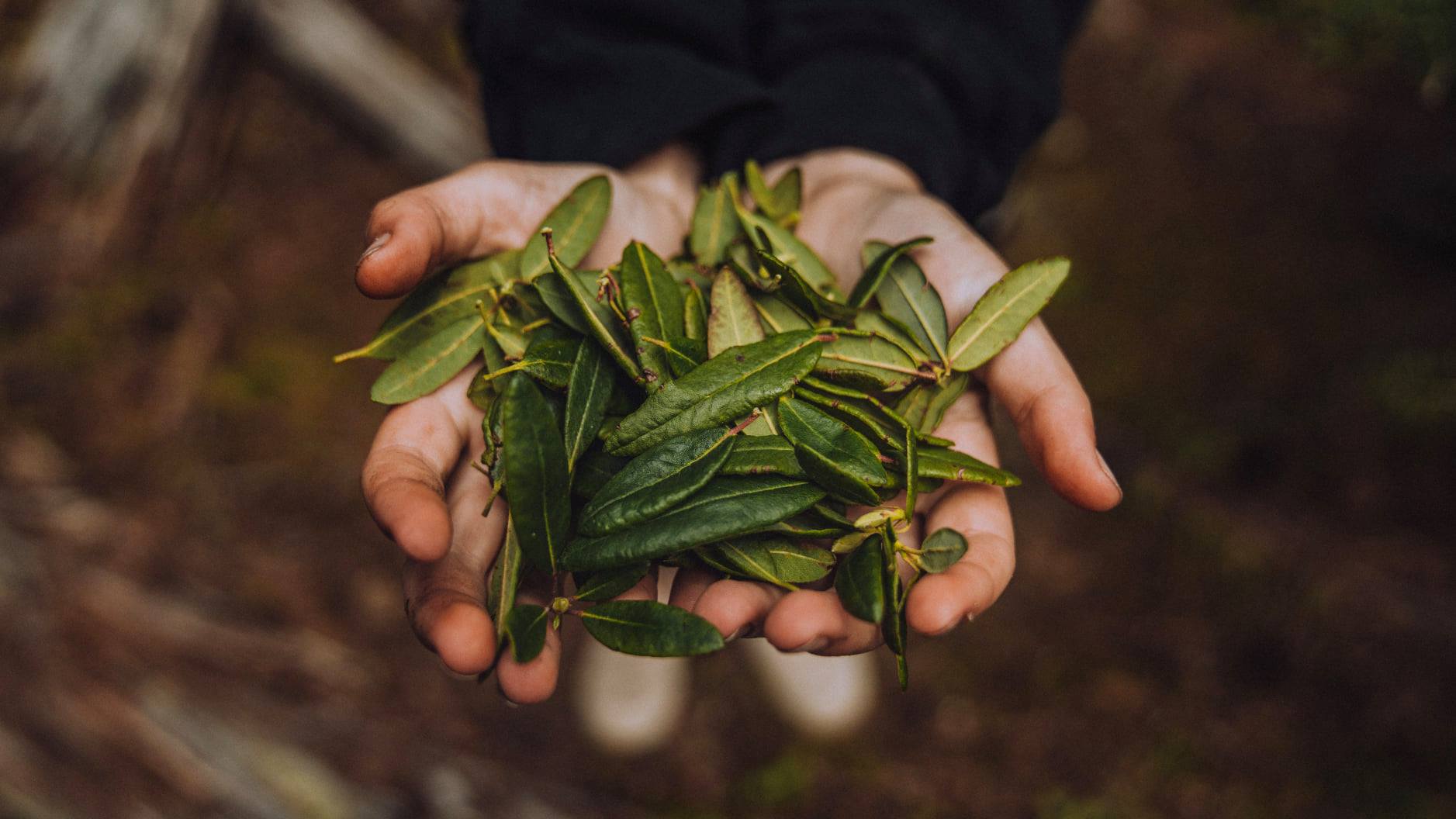
Labrador tea leaves gathered in the valley. Photo: Keith Koepke.
The valley is the source of many Tŝilhqot’in songs, stories, and prayers that have been passed down from generations since sadanx (of long, long ago). The belief systems and language were born out of the land and waters.
“In our language, Nenqay means the earth. The earth itself is a being, it’s alive, and we co-exist with this being. We’ve been part of changes on this earth.”
– Nits’ilʔin Roger William, Xeni Gwet’in
Tŝilhqox Biny (Chilko Lake) is the headwaters of one of the strongest sockeye salmon runs in the world. Millions of sockeye salmon migrate from Vancouver B.C., upstream to these spawning grounds. This area is part of the Chilcotin Watershed, which is known as a salmon stronghold. The Tŝilhqot’in still spend the summer months gathering salmon through the traditional dip net fishery and gaffing.
Annual gatherings happen in July and August in the valley. Xeni Gwet’in hosts the Elders Gathering at Henry’s Crossing to celebrate and honour community Elders and provide inter-generational and family-oriented activities to ensure culture and traditional practices are handed down from one generation to the next. In August, Xeni Gwet’in hosts the Gymkhana and Mountain Race to encourage horsemanship activities in the community.
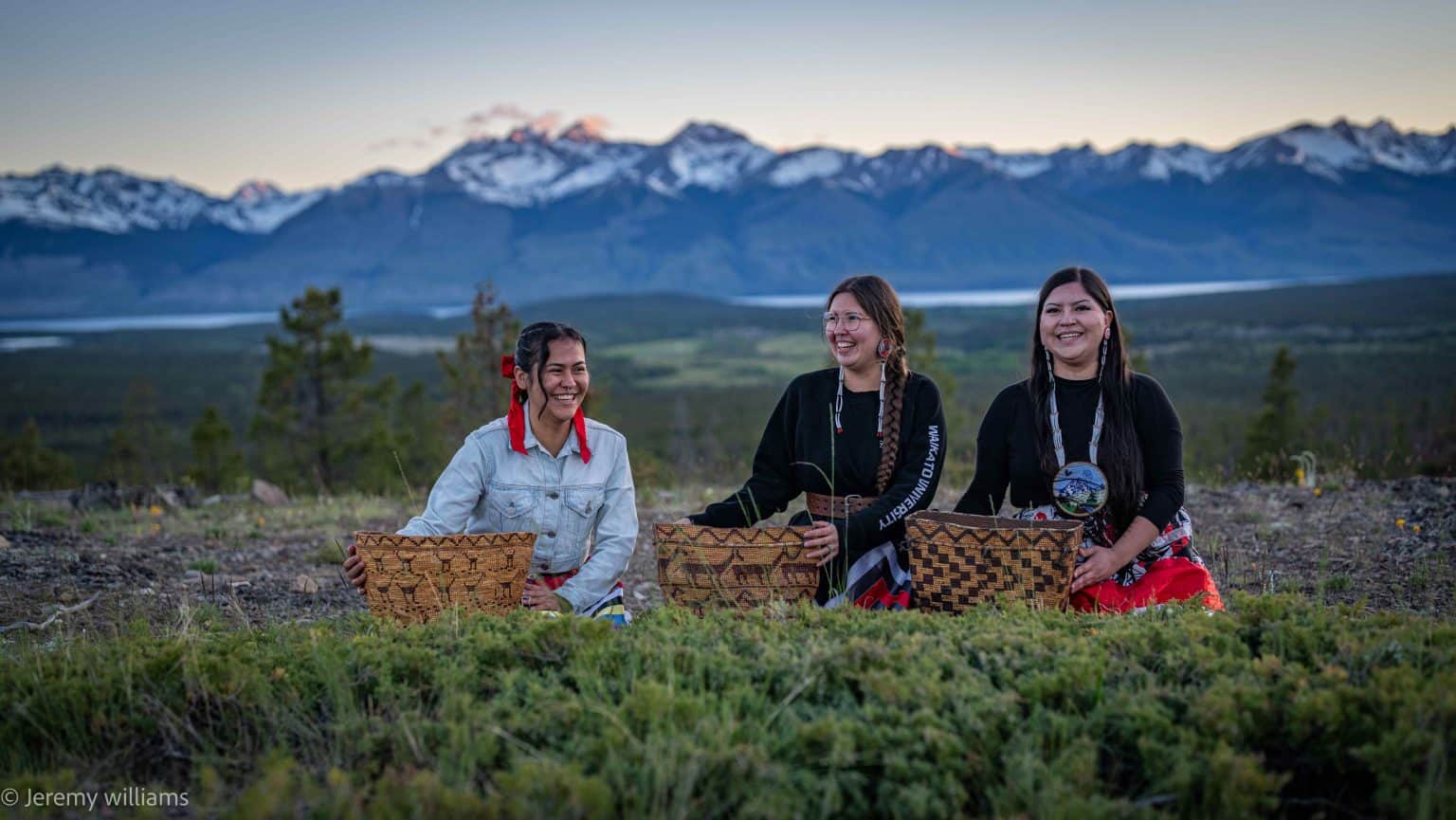
Sierra William, Loretta Jeff and Chantu Williams, Xeni. Photo: Jeremy Williams.
The people of Xeni have long managed and used wild horses. The area is known around the world for these wild horses. Some historic documentation indicates that horses in the Brittany Triangle (an area to the north of Tŝilhqox Biny) most likely originated from horses of Spanish ancestry brought to the area by Tŝilhqot’in First Nations in around 1740 along ancient trade routes from Plateau grasslands to the south. In the early 2000s, the ʔElegesi Qiyus Wild Horse Preserve was created in the Brittany Triangle. The right to manage and use wild horses still exists today as declared by Justice Vickers in 2007. In 2004, the film Wild Horses, Unconquered People spoke to the unique nature of the wild horses. In 2020, the History Canada series The Wild Ones brought the relationship between the Xeni Gwet’in and the wild Qiyus horses to a national audience, following the riders who manage the herd in the valley.
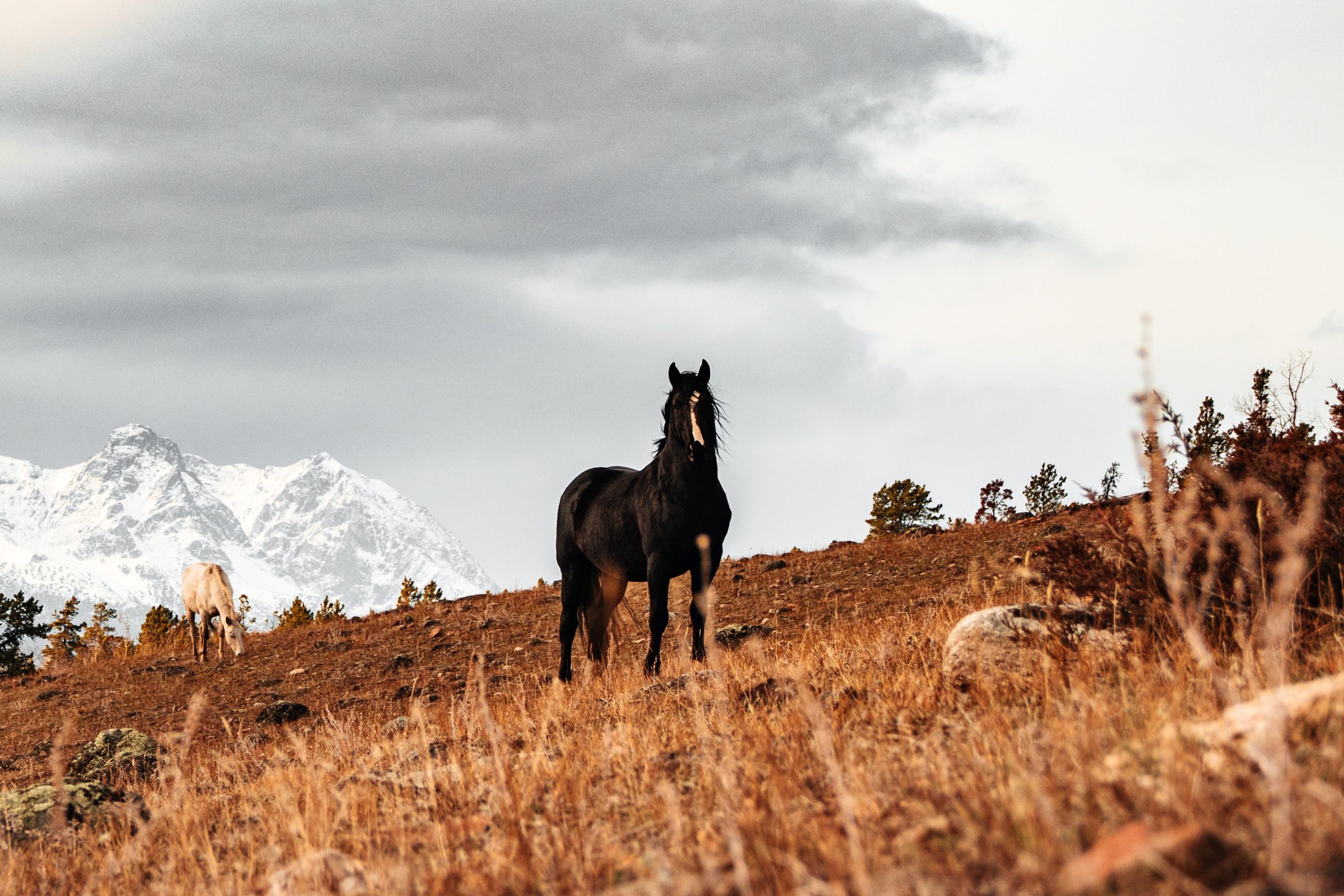
Wild horses in Nemiah Valley. Photo: Keith Koepke.
“We’d go out and get the horses when we needed them to hunt moose and deer and to trap. Horses get to a point where you can’t use them anymore, so you have to catch another horse if you need to. You catch horses and train them.”
– Nits’ilʔin Roger William, Xeni Gwet’in
This way of life, rooted in the land and carried through generations, has not been protected without a fight. Outside interests have arrived at the valley many times. The people of Xeni have met them each time with strength and resistance.


Protecting Our Way of Life
The people of Xeni fought tirelessly to protect their way of life. In the 1980s, BC Hydro proposed a massive hydroelectric development that would have linked Dasiqox Biny and Tŝilhqox Biny. A development like this would have flooded the entire Nemiah Valley and ended the Xeni Gwet’in’s way of life in this place. The people of Xeni opposed it fiercely, and it was never built. At the same time, clearcut logging was also encroaching on the valley.
In response to the threat of logging and mining to the territory, the Chilcotin Declaration was passed in 1983. It read “We are the Chilcotin and we declare to all men and women that we are an independent Nation, proud and free.” Six years later, on August 23, 1989, the Nemiah Declaration (Nenduwh jid guẑit’in Declaration) was proclaimed, building on that foundation and setting out specific protections for the Nemiah Wilderness Preserve. In 2015, after the Tŝilhqot’in Decision at the Supreme Court of Canada (Tsilhqot’in Nation v British Columbia, 2014 SCC 44), the 1989 Declaration was officially passed into law.
Nenduwh jid guẑit’in Declaration (1989)
Proclaimed August 23, 1989. Translated from Tŝilhqot’in into English.
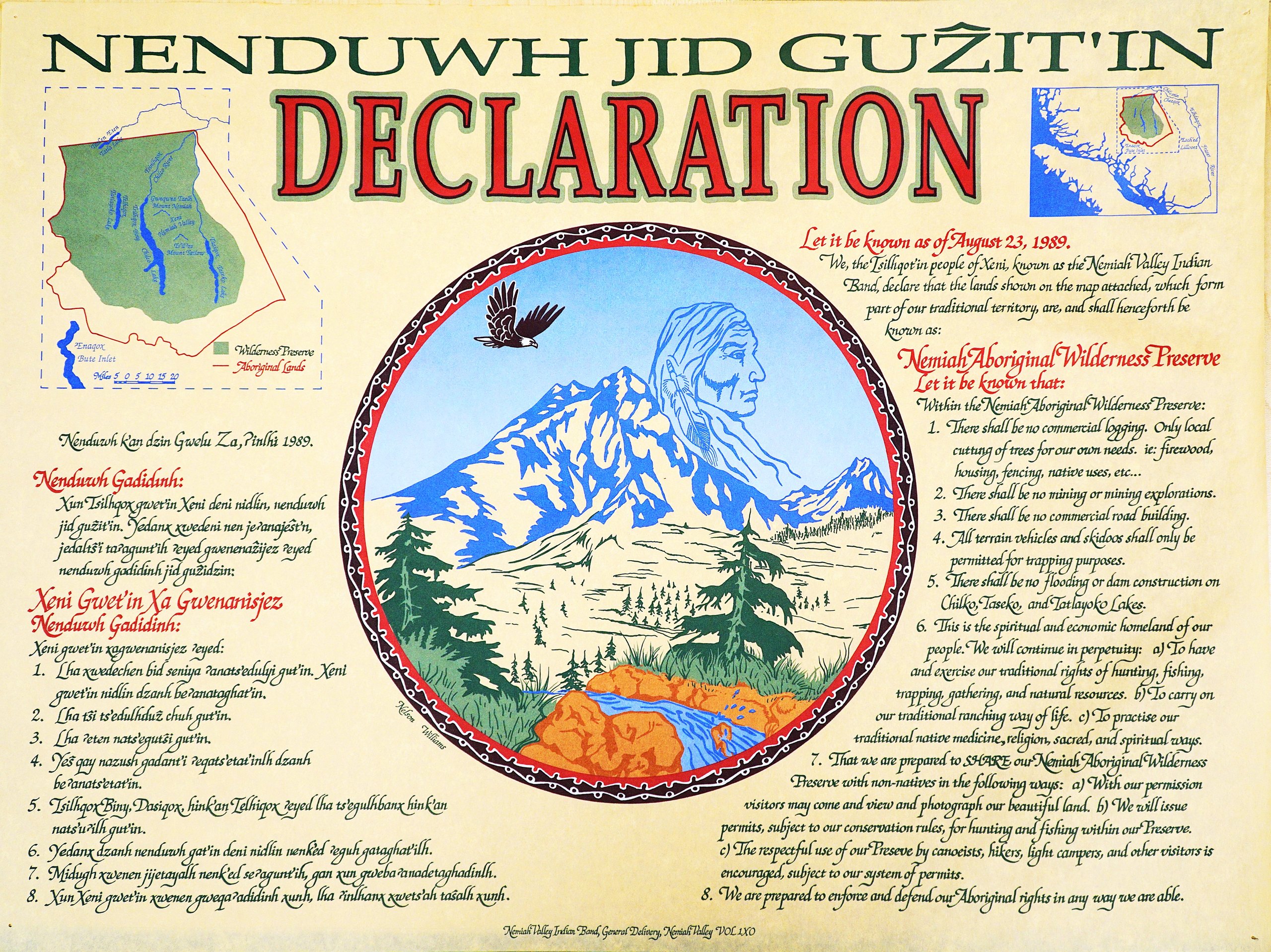
Nenduwh Jid Guẑit’in, the Nemiah Declaration, proclaimed August 23, 1989. The Tŝilhqot’in and English texts appear side by side, with the boundary of the Nemiah Aboriginal Wilderness Preserve mapped at the top left.
Read the signed English version.
Let it be known that within the Nemiah Wilderness Preserve:
- There shall be no commercial logging. Only local cutting of trees for our own needs. i.e. firewood, housing, fencing, native uses, etc.
- There shall be no mining or mining explorations.
- There shall be no commercial road building.
- All terrain vehicles and skidoos shall only be permitted for trapping purposes.
- There shall be no flooding or dam construction on Chilko, Taseko, and Tatlayoko Lakes.
- This is the spiritual and economic homeland of our people. We will continue in perpetuity:
- To have and exercise our traditional rights of hunting, fishing, trapping, gathering, and natural resources.
- To carry on our traditional ranching way of life.
- To practice our traditional native medicine, religion, sacred, and spiritual ways.
- That we are prepared to SHARE our Nemiah Wilderness Preserve with non-indigenous in the following ways:
- With our permission visitors may come and view and photograph our beautiful land.
- We will issue permits, subject to our conservation rules, for hunting and fishing within our Preserve.
- The respectful use of our Preserve by canoeists, hikers, light campers, and other visitors is encouraged subject to our system of permits.
- We are prepared to enforce and defend our rights in any way we are able.
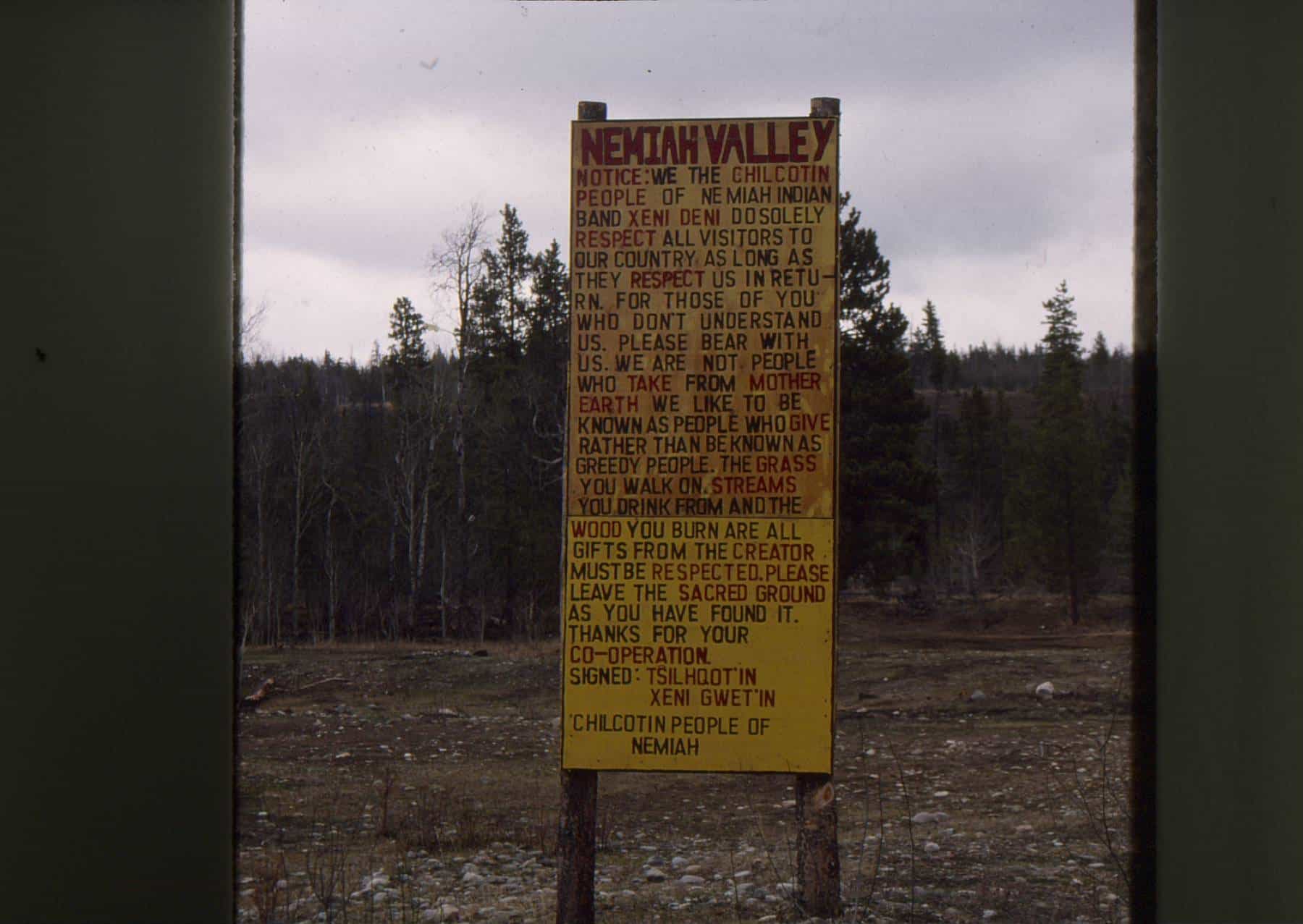
An old sign for visitors to the Nemiah Valley.
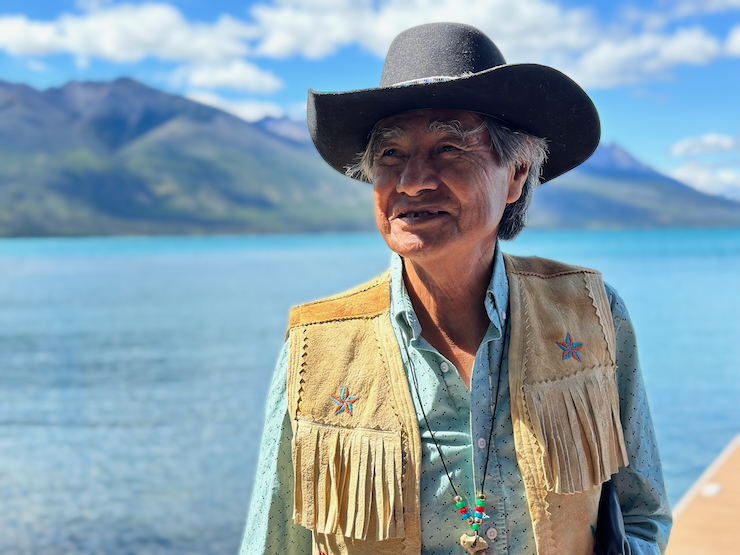
Elder Patrick Lulua talking with visitors in Nemiah Valley. Photo: Keith Koepke.
The Declaration was tested almost immediately. In April of 1990 the Trapline Action was filed against several logging companies with Carrier Lumber being one of them. On December 11, 1991, an out of court settlement was reached. Carrier Lumber agreed to stay out of the trapline area for 5 years. Shortly after, Carrier Lumber developed plans to log the Brittany Triangle to the North, outside of the trapline area but still of importance to the people of Xeni.
In 1992, the BC Ministry of Forests granted Carrier Lumber a permit to log in the Brittany Triangle. The Xeni Gwet’in erected a roadblock, the province pulled the permit, and on May 7, 1992, Carrier Lumber turned away. To this day, the Brittany Gathering is held every May 7 to mark the date and to honour the Tŝilhqot’in and Tŝilhqot’in supporters who stood at the roadblock.
The 1990s was also a time when competing land uses of a large area between Chilko Lake and Taseko Lake were coming to a head. The Province of BC wanted to develop a land use plan for the area. Xeni Gwet’in agreed to take part in these negotiations as equal partners in decision making. This process became known as the Chilko Study and led to the creation of Tsʼilʔos Provincial Park (listed by BC Parks as Ts’yl-os) in 1994. The NDP Government at the time signed a Memorandum of Understanding (MOU) with Xeni Gwet’in. As part of this agreement, the park is co-managed by Xeni with their own park rangers. Tsʼilʔos Provincial Park is 233,240 hectares of protected area.
During the 90s there was also a large deposit of gold and copper found at the sacred site of Teẑtan Biny (Fish Lake). At the time, experts provided Xeni Gwet’in with eight options for how to extract the minerals; however, the company decided without Xeni involvement. This was the beginning of a decades long fight to protect this area. Read more about Teẑtan Biny.
The Valley Today
The people of Xeni have fought tirelessly to protect their homelands through the Nemiah Declaration and historic 25-year battle to have Canada recognize their inherent jurisdiction of their lands.
The ʔElegesi Qiyus Wild Horse Preserve, established in the Brittany Triangle in the early 2000s, protects the wild horses that have lived in this area for nearly three centuries. The right to manage and use these horses was affirmed by Justice Vickers in 2007 and remains in place today.
The fight to protect Tŝilhqot’in territory extends beyond the Nemiah Valley. For nearly three decades, the Tŝilhqot’in also defended Teẑtan Biny (Fish Lake) from the proposed Prosperity and New Prosperity mines. That conflict was resolved in 2025 with the Teẑtan Biny Gagaghut’i (Agreement), which requires Tŝilhqot’in consent for any future mineral exploration or mine development in the area. Read more about Teẑtan Biny.
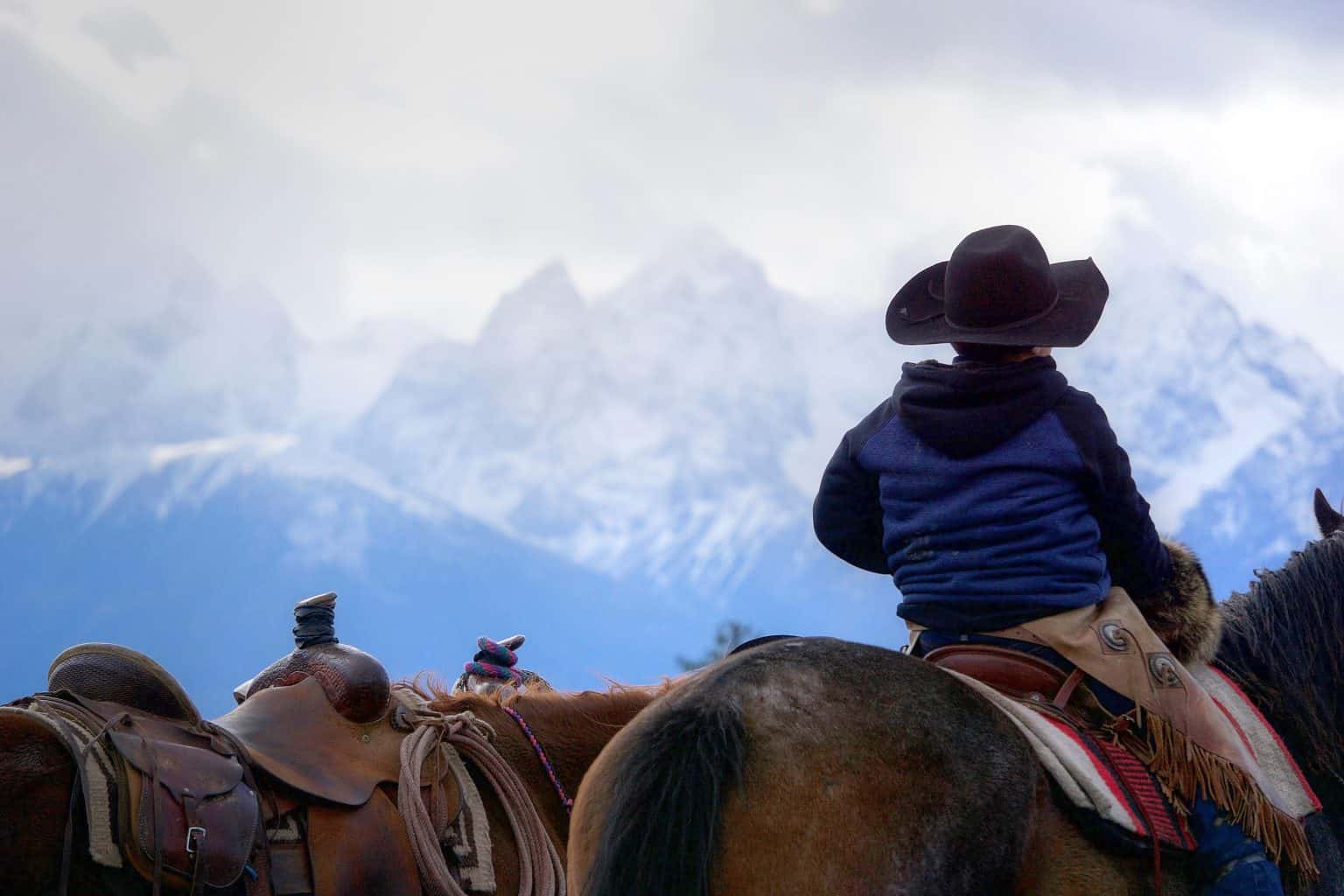
Young Tŝilhqot’in rider looks towards the mountains from the Nemiah Valley. Photo: Max Nishima.
Xeni Gwet’in continues to host annual gatherings in the valley, including the Brittany Gathering each May 7, the Elders Gathering at Henry’s Crossing, and the Gymkhana and Mountain Race in August. Every June since 2009, the community makes the week-long journey into Williams Lake by horse and wagon for the annual Williams Lake Stampede. Elders and kids make the trip together, and the journey is as much a part of the culture as the Stampede itself. These are not commemorations of the past. They are the living practice of a culture that was born from this land and continues to shape it.
The protection of the valley was successful in part due to the many supporters of the fight. This includes the David Suzuki Foundation, Assembly of First Nations, Lennan Foundation, Friends of Nemiah Valley, and the Wilderness Committee.
The Nemiah Valley is not a wilderness in the colonial sense. It is a homeland, governed by Tŝilhqot’in law, cared for by the people of Xeni, and held in trust for the generations still to come.
In the Valley of Wild Horses — TELUS originals.
To learn more about the legal foundation that protects the valley, see Tŝilhqot’in Rights & Title and the Declared Title Area.
Frequently Asked Questions
The Nemiah Valley is in the Tŝilhqot’in Territory, approximately 150 kilometres southwest of Williams Lake in the Cariboo Chilcotin region of the Central Interior of British Columbia. It is considered extremely remote, situated between Chilko Lake and Taseko Lake and only accessible by gravel road.
Xeni Gwet’in translates to the People of Xeni. They are a distinct community of First Nations within the Tŝilhqot’in Nation that speak the Tŝilhqot’in language and call the Nemiah Valley area their homeland.
Also known as the Nenduwh jid guẑit’in Declaration, this declaration is a statement by the people of Xeni on what they allow to happen in the Xeni Gwet’in area and what they do not allow. It clearly outlines expectations of use by all visitors, residents, government and industry.
Yes. The Nemiah Valley is a pristine wilderness that welcomes visitors that enjoy the outdoors, culture, and exploration.
Yes. Wild horses can often be seen by residents and visitors in large packs.
