Home News & Events Tŝilhqot’in Nation Takes Action to Save Chilko Salmon from Catastrophic Risk
 Active Alerts




Home News & Events Tŝilhqot’in Nation Takes Action to Save Chilko Salmon from Catastrophic Risk
January 15, 2025 — Williams Lake, BC
Tŝilhqot’in Nation Takes Action to Save Chilko Salmon from Catastrophic Risk
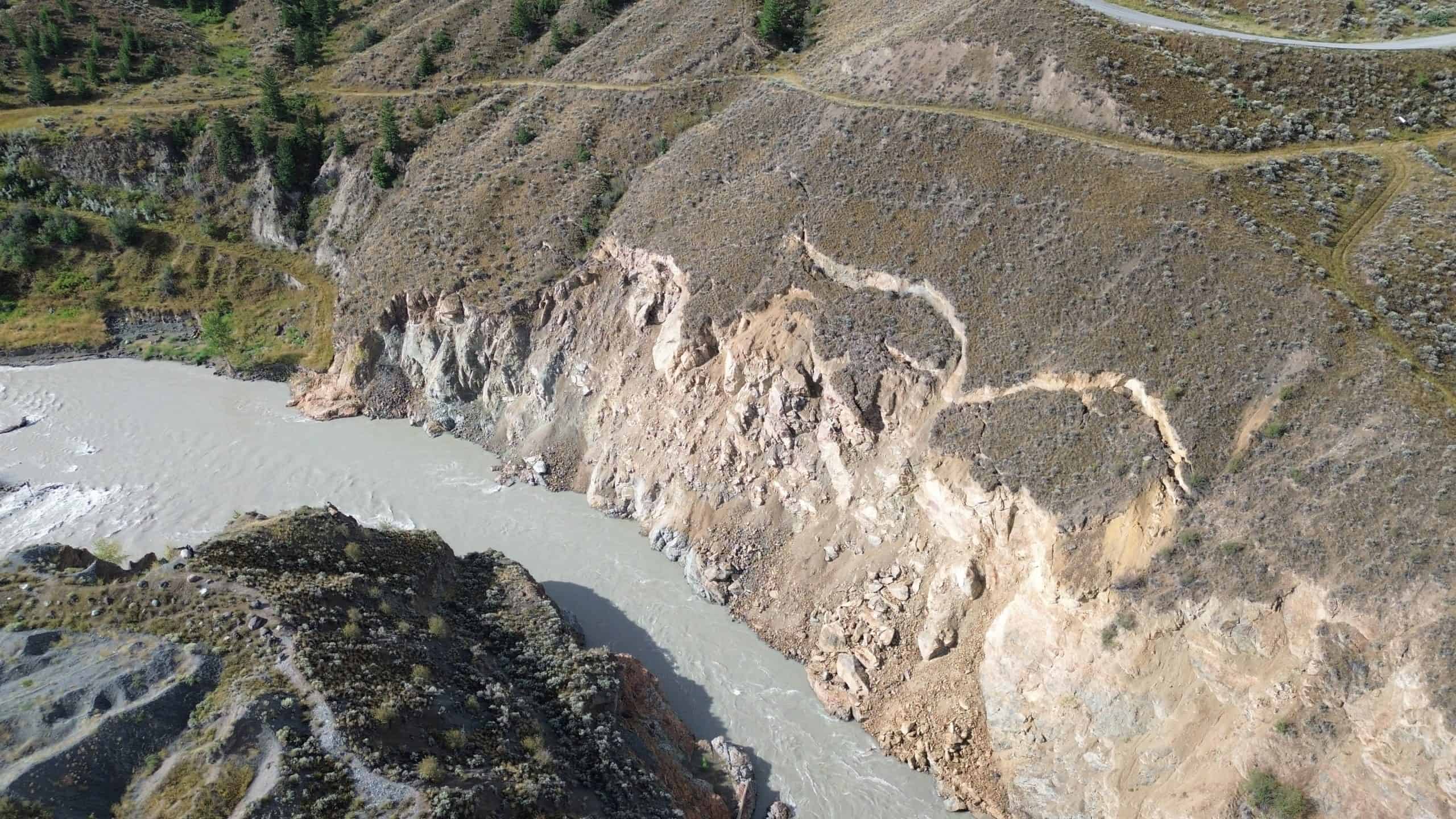
Today, the Tŝilhqot’in National Government (TNG) announced its commitment to protect Chilko salmon runs by advancing – and funding – urgent mitigation measures to prevent imminent rockfall at Nagwentled (Farwell Canyon) on the Tŝilhqox (Chilcotin River), a critical corridor for Fraser River salmon migration.
TNG leads the Emergency Salmon Task Force, established in response to the Tŝilhqox Landslide in 2024. TNG raised the alarm when a geotechnical report commissioned by BC after the landslide found an “imminent risk” of rockfall into the Tŝilhqox at Nagwentled, the gateway for several critical salmon species to return to their spawning grounds. The Task Force has warned that further rockslides during the salmon migration period could be catastrophic and long-lasting, creating migration delays similar to the 2019 Big Bar landslide, with devastating impacts on already threatened salmon populations.
Nagwentled is a critical migration corridor for salmon stocks of local, regional, and international importance. This includes the iconic Chilko sockeye run, which regularly accounts for more than half of the total Fraser River sockeye return and plays a vital role for all First Nations along the Fraser River and marine approach fisheries including Vancouver Island, Canadian commercial fisheries, and southern US commercial and subsistence fisheries, making the consequences of disrupted passage at Nagwentled far-reaching and international in scale.
Facing this imminent risk, the Task Force has developed a proactive slope stabilization plan that includes manual scaling and targeted trim blasting – a well established and common approach for stabilizing slopes for infrastructure projects. This plan was collaboratively designed, assessed and supported for urgent action by all Task Force partners, which include technical representatives of TNG, BC and the federal Department of Fisheries and Oceans (DFO) and the Upper Fraser Fisheries Conservation Alliance.
However, the Tŝilhqot’in Nation was alarmed by recent indications from both Canada and BC that funding will not be made available to support this proactive mitigation plan before the 2026 migration, putting these critical salmon populations at dire risk.
In response, TNG is announcing its commitment to fund this mitigation work itself, if government will not step up to prevent this potential catastrophe, rather than risk devastating impacts for salmon runs that the Tŝilhqot’in have protected and stewarded for generations. Costs are estimated at $2.5M – $3M (in contrast to more than $200M spent by DFO in response to the Big Bar Slide).
TNG has proactively engaged provincial and federal authorities to initiate permitting and is fully committed to consulting all impacted First Nations along the Fraser River who depend on these salmon for their sustenance and way of life.
“Salmon are the heart of our culture and who we are as Tŝilhqot’in, ‘People of the River’. Our way of life is at stake. Not just our way of life – these salmon feed Indigenous communities all along the Fraser River. It is unthinkable to us that Canada and BC would have full knowledge of this risk to salmon, have a mitigation plan that was developed together and ready to go, and still not take the steps needed to prevent catastrophe. We have so many dire needs for funding in our Communities, but we cannot idly stand by. Today we are putting our people and culture first and honouring our sacred duties to the salmon that feed us, to our ancestors and to our children and grandchildren. We ask government and all affected First Nations to stand with us and put the salmon first when they need us the most.”
—Nits’ilʔin (Chief) Otis Guichon, Tribal Chief, Tŝilhqot’in National Government, Tŝideldel First Nation
“We are facing a threat to our Aboriginal rights and our international human rights as Indigenous peoples. For generations, our people have sacrificed to protect the pristine headwaters that nurture these critical salmon populations. Today, we do the same, honouring the legacy of our War Chiefs. We have no time to wait for government to do the right thing, or to play politics, or argue over claims made to our lands by other First Nations. We must act now to protect our salmon, for generations to come.”
—Nits’ilʔin Francis Laceese, Tl’esqox, TNG Tribal Vice-Chief
“The Chilcotin is a globally significant salmon system supporting some of the strongest salmon populations we have left. Taking action at Farwell Canyon is about safeguarding a public resource that supports fisheries, communities, and ecosystems far beyond this watershed.”
—Greg Knox, B.C. Program Director, Wild Salmon Center
-30-
More Information
Media Contact

August 06, 2026 — Williams Lake, BC The Tŝilhqot’in National Government (TNG) is deeply concerned
June 16, 2026 — Williams Lake, BC Tŝilhqot’in Nation Rejects B.C. Hydro Announcement of Potential
