

Home Governance Dechen Ts’edilhtan: Laws
Dechen Ts’edilhtan: Laws
Tŝilhqot’in National Government - Laws
The Tŝilhqot’in National Government works towards establishing strong practices and policies within our territory. This is done through our constitution development, laws, and leadership.




Laws and Policy
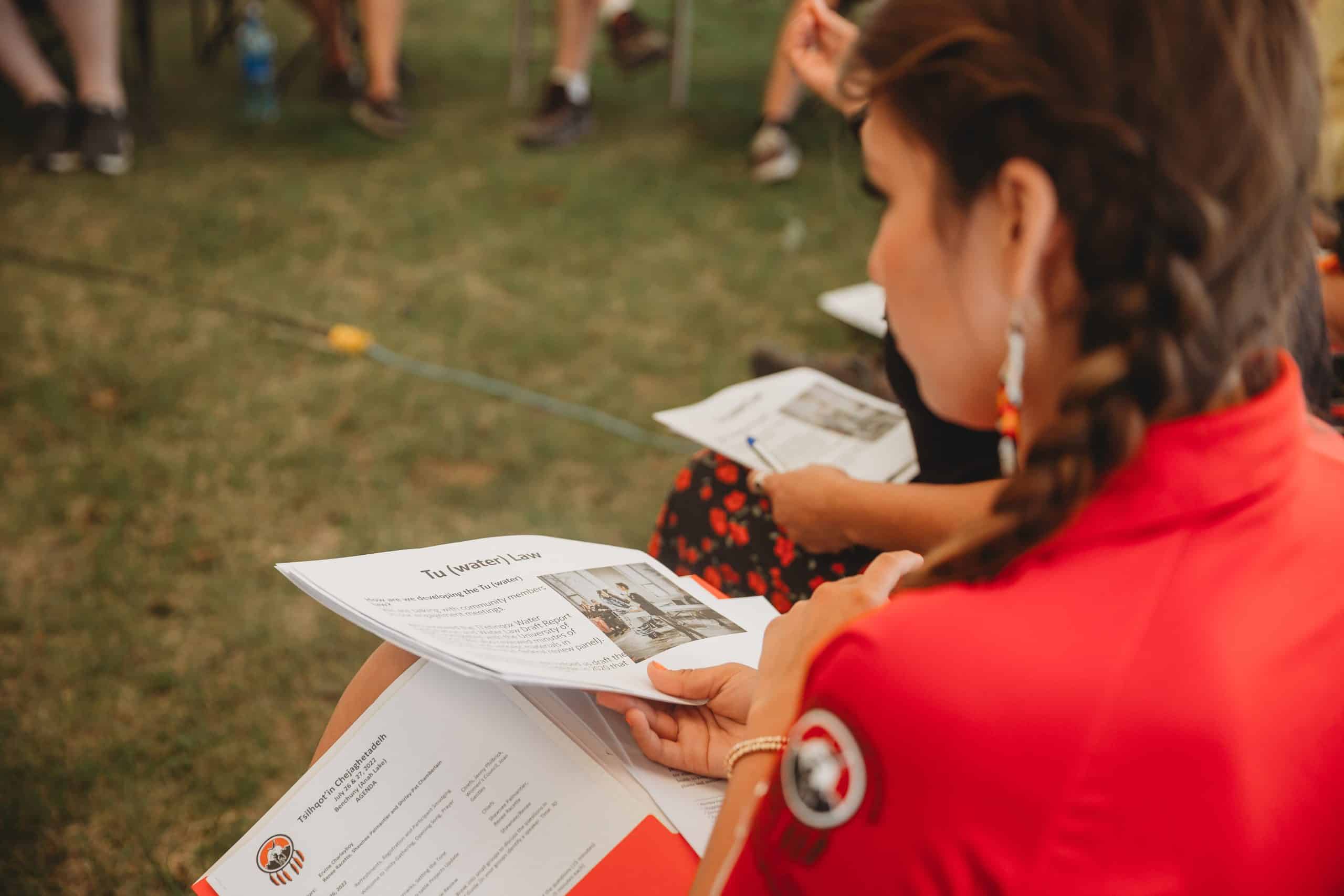
The Tŝilhqot’in National Government has long held laws that govern the land and people. These oral laws are being put to paper.
- Tŝilhqot’in ʔEsqax Sutsel Jeniyax (Tŝilhqot’in Children and Family Law)
- Nemiah Declaration (Tŝilhqot’in)
- Nemiah Declaration (English)
- Tŝilhqotin Emergency Moose Protection Law (English)
- Tŝilhqot’in Nation Nulh Ghah Dechen Ts’edilhtan (“Tŝilhqot’in Nation Wildlife Law”)
- Tsilhqotin Nation Hunting Order
- Policy Regarding “Other Training or Courses” for s.15(a) of the Hunting Order
- Elhdaqox Dechen Tsedilhtan (“Sturgeon River Law”)
- TNG Mining Policy


“A Nation’s laws are the deepest expression of its culture. They say who we are, what our values are, how things ought to be done in our society, what we want for our community and our children and our grandchildren.”
– Joseph Thomas Flies-Away, former Chief Judge of the Hualapai Tribal Court
Constitution
Frequently asked questions
A constitution is the highest law of a society or a people. It states fundamental values and rules of a society, how the society’s government is structured, and it helps explain the relationship between the government and its people. For the Tŝilhqot’in, the constitution will express core dechen ts’edilhtan.
At this point, we expect our constitution to explain:
- Who we are and where we come from
- Our core values
- Our core rights and our core responsibilities to each other and to the nenqay
- How our nation level government is structured, its responsibilities, and how it works with and alongside our six community governments
Our constitution will only describe how our nation-level government works at a high level, with more specifics provided in supporting written laws, policies, and practices.
The Governance Team continues to engage with deni about what our constitution should say, so please join upcoming meetings and share your thoughts with us.
We are preparing a written constitution:
- To affirm who we are and what unites us as Tŝilhqot’in deni, including our sacred duty to care for and protect our nenqay.
- To exercise our inherent jurisdiction and stand up our nation-level government on our dechen ts’edilhtan.
- To provide a strong foundation for our nation to heal from the severe harms of colonialism and move forward in accordance with our values and teachings.
- To affirm that we have both a national government and six community governments that each have their own distinct responsibilities and who work together as needed to care for our deni and the nenqay.
- To help secure long-term funding and revenues to pay for Tŝilhqot’in programs, services and initiatives.
- To leave a legacy of strong, unified Tŝilhqot’in governance for our future generations that they can build on, improve and refine as the Tŝilhqot’in Nation moves forward in the years to come.
Strong Tŝilhqot’in deni support will be needed to formally adopt the constitution. Once the document is finalized in Tŝilhqot’in and English, the Tŝilhqot’in deni will vote on whether to approve it.
We have charted out the tasks and timeline below. Please have a look at the link below.
More Information
To find out more information about the Constitution work, please contact Shawnee Palmantier at spalmantier@tsilhqotin.ca.
Tŝilhqot’in Ts’iqi Dechen Jedilhtan Advisory Council
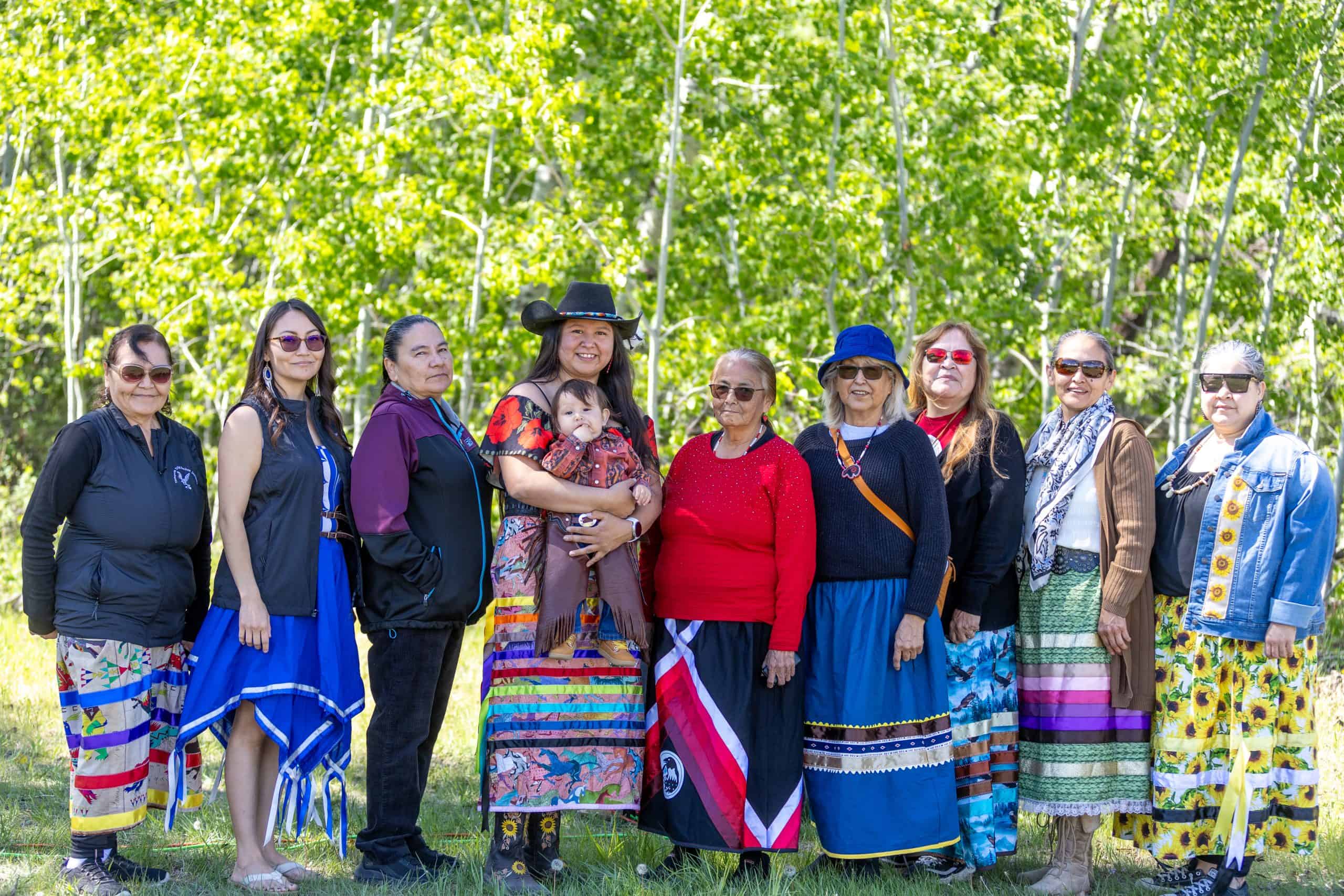
Also known in English as the Tŝilhqot’in Women’s Council, this council was created in the Fall of 2019 following direction from the Tŝilhqot’in Chiefs and engagement with the Tŝilhqot’in communities.
Purpose:
- Support women participating in Tŝilhqot’in Nation leadership at the community and Nation level
- Be role models, healthy (free of drugs & alcohol), and support healing, and cultural revitalization that contributes to healthy families, communities, and the Nation
- Prepare recommendations for the Nits’inʔin-qi that are focused on the work of the Women’s Council for the benefit of Tŝilhqot’in deni, and future generations
- Meet with Nits’ilʔin-qi regularly to advise on issues and decisions prior to implementation as requested by the Nits’il?in-qi or those that have been brought forward by the Women’s Council as emerging issues
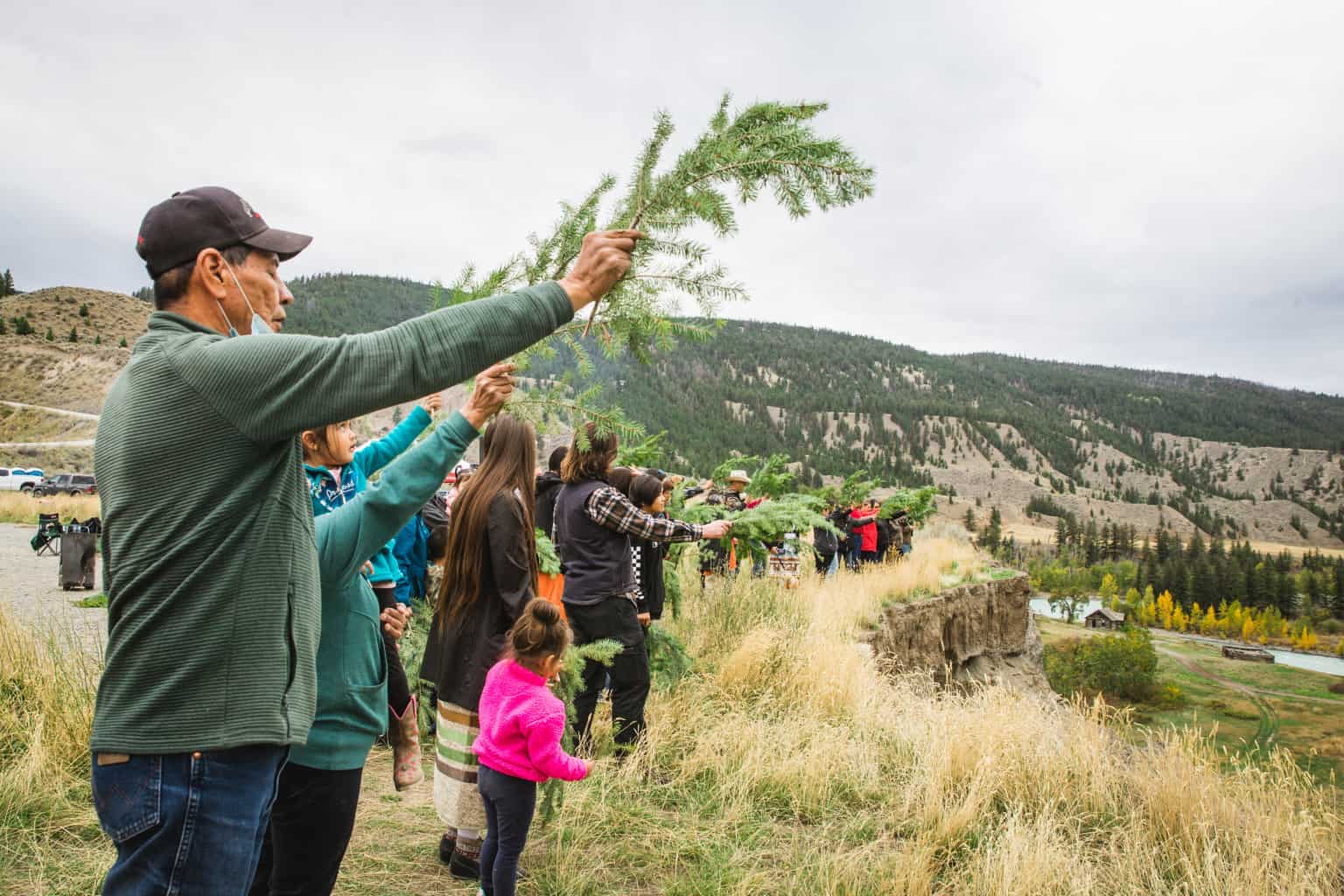
The Women’s Council representatives also have roles in each of their respective communities as determined by the community and its leadership. We are very fortunate that the Women’s Council is well rounded, strikes a balance between traditional and western knowledge, and includes both Elders and youth. In their first and second year the Women’s Council were instrumental in providing guidance to the Social sub-table and its initiatives. In 2021, the Council worked together with the Governance Committee and knowledge holders to conduct a ceremony for our fish and water.
Members of the Council
Each Tŝilhqot’in Community has a two female representatives on the council.
Tl’esqox
- Lily Garland-Isnardy
- Shirley Diablo
- Loretta Jeff, Alternate
Tl’etinqox
- Angelina Stump
- Cynthia Dick
Xeni Gwet’in
- Doreen William
- Marilyn Baptiste
Tŝideldel
- Crystal Stump
- Dora Grinder
ʔEsdilagh
- Thelma Stump
- Sharon Palmantier
Yuneŝit’in
- Micole Myers
- Rebecca Solomon
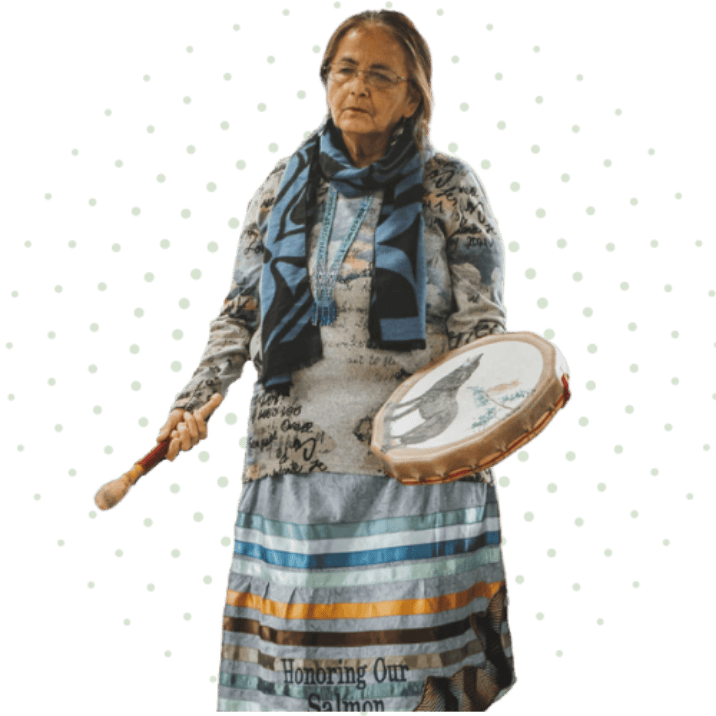
Matriarch Elder Angie Stump
“I could clearly see the Big, Huge mirror broken into a million pieces… in the mirror was our Tŝilhqot’in language, stories, culture, identity, songs, drums, strength, etc. It got broken into a million pieces.
Now, it’s up to each one of us to put the pieces back together. And it will be a very slow process…
Today, we are slowly healing and we are putting the mirror back together.
We are strong Resilient Tŝilhqot’in.”
Elder Angie Stump is a Matriarch, well respected Elder and member of the Tl’etinqox community. She is a fluent Tŝilhqot’in speaker and is passionate about cultural revitalization using traditional teachings, such as ribbon skirt making, ribbon skirt fashion shows, traditional songs, and baby basket making.
Angie sits on the Tŝilhqot’in Tsiqi Dechen Jedilhtan and continues to bring cultural awareness in everything she does.
